فرهنگبیدار
FIGURES

Figures of Iran

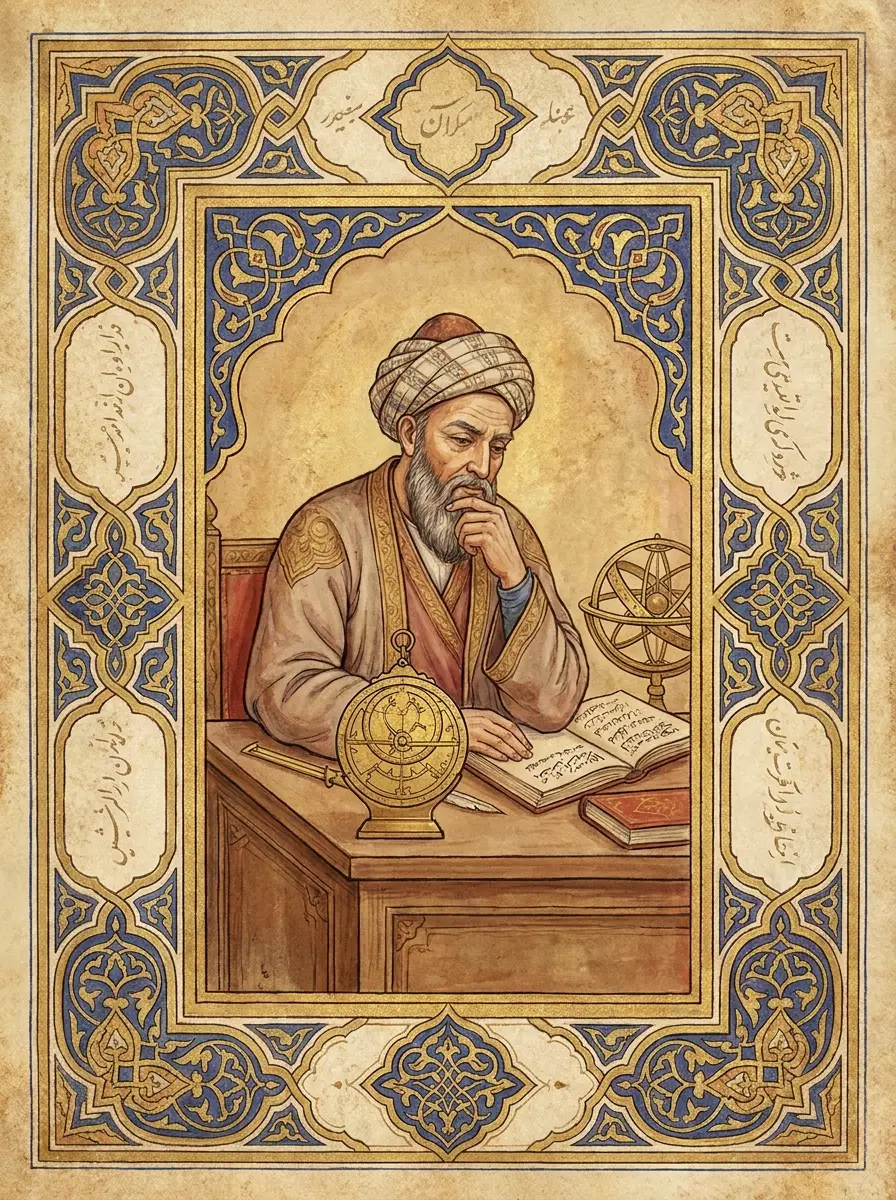
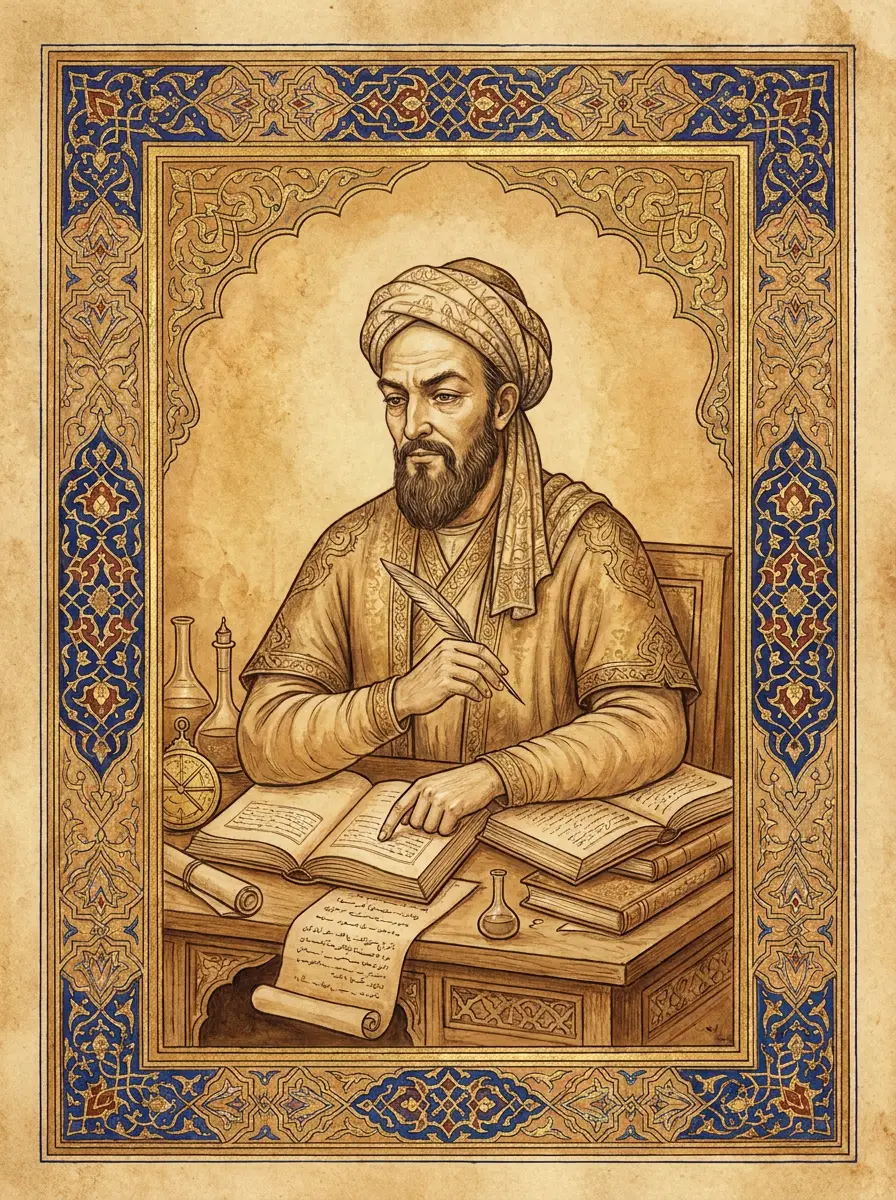
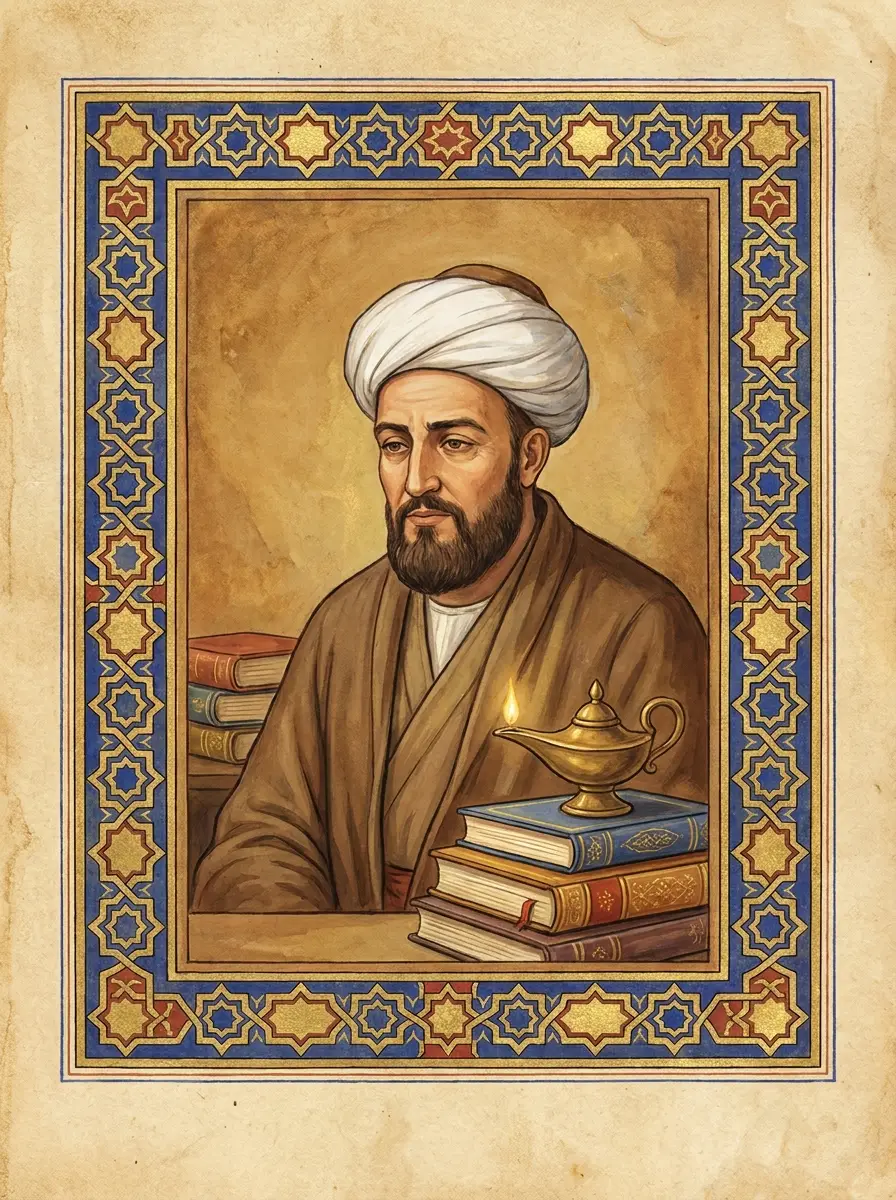
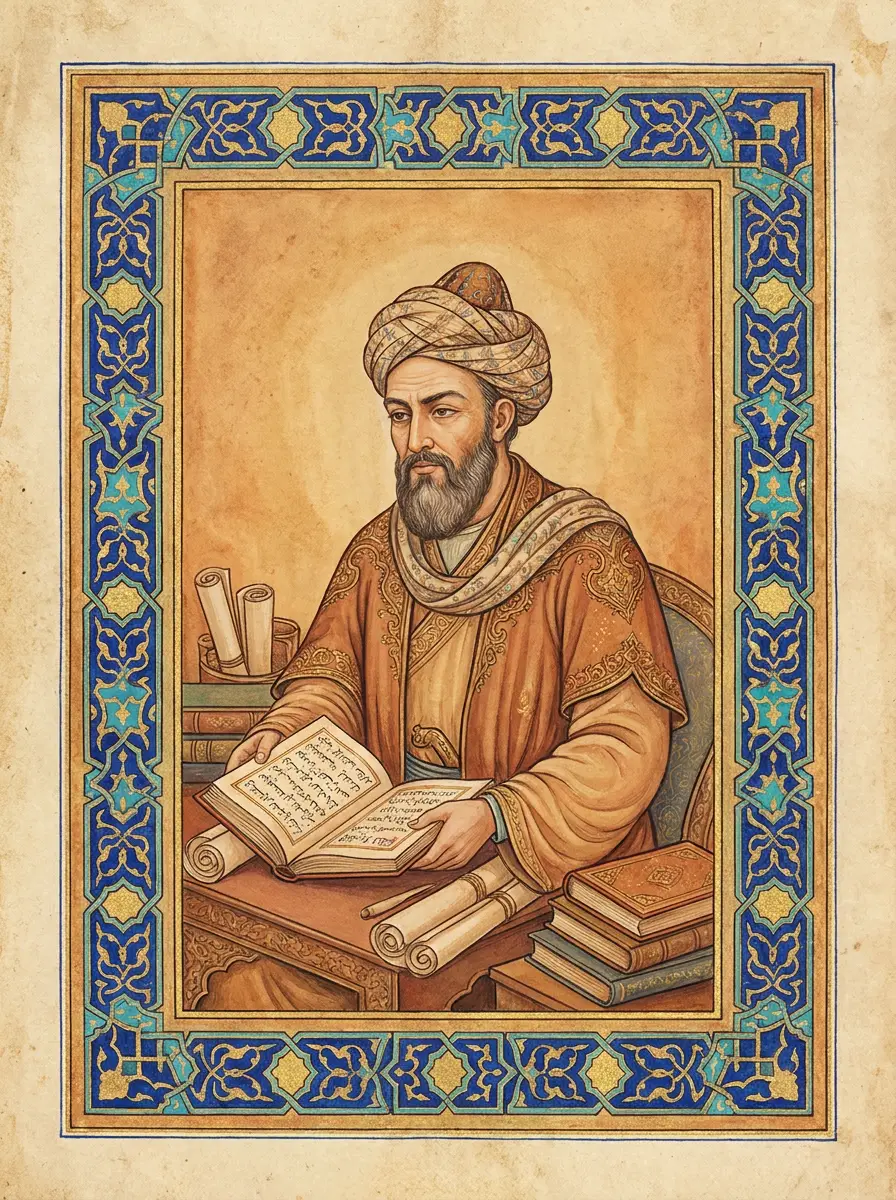
The people who shaped Iran's history and culture — documented, sourced biographies. Images are honest: artistic reconstruction or calligraphy, clearly labeled; the Prophet and Imams are never depicted.

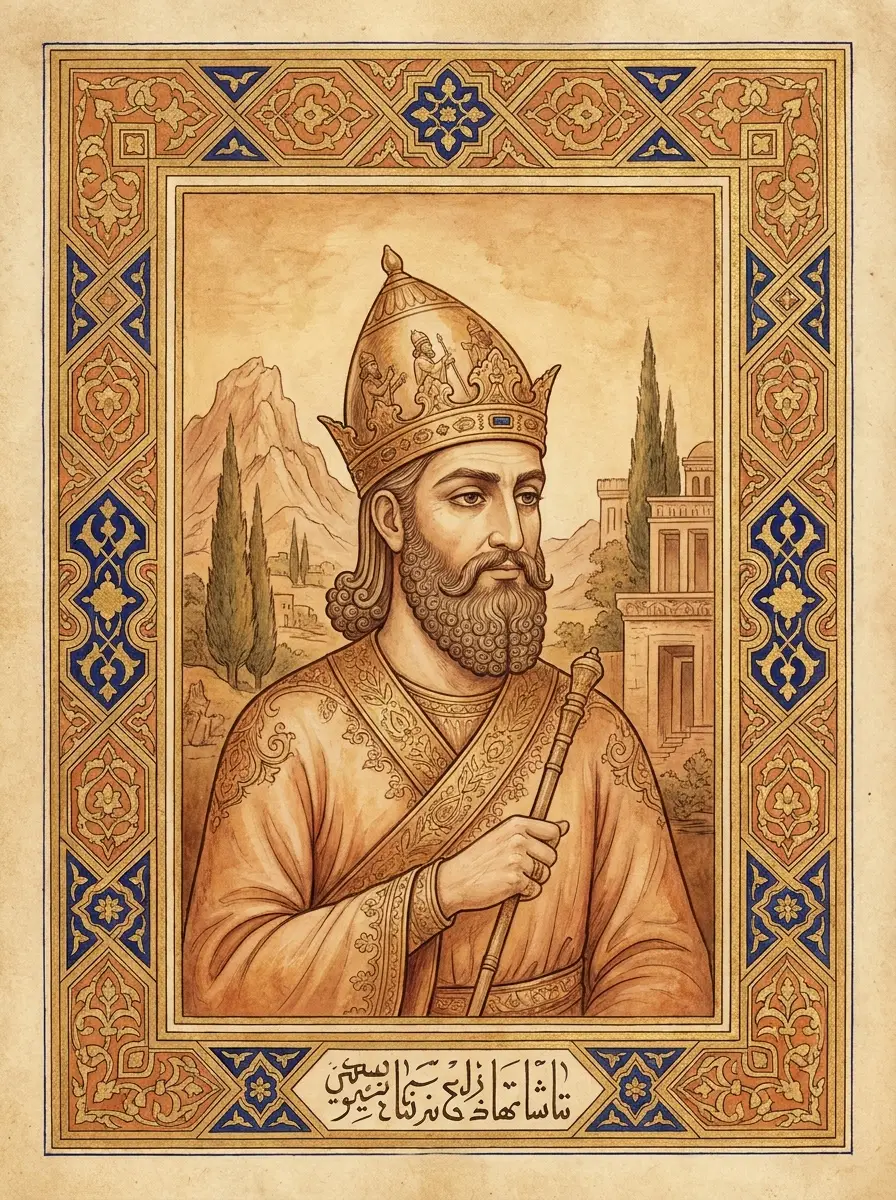
Cyrus the Great
Artistic reconstruction — not a documented likeness

Cyrus the Great

c. 600–530 BCE
founder of the Achaemenid Empire

Cyrus II, called Cyrus the Great (c. 600–530 BCE), was the founder of the Achaemenid Empire and its first King of Kings. Rising from the Persian region of Anshan, he overthrew the Median Empire (c. 550 BCE) and then conquered Lydia and Babylon (539 BCE), assembling the largest empire the world had yet seen. He is remembered for a comparatively tolerant model of rule, exemplified by his permitting the Judean exiles to return from Babylon, a policy echoed on the Cyrus Cylinder and in the Hebrew Bible. He died c. 530 BCE while campaigning on the empire's northeastern frontier and was succeeded by his son Cambyses II. A genuinely contested point is the manner of his death: Herodotus reports he fell in battle against the Massagetae queen Tomyris, but other ancient accounts conflict and the story is widely regarded as semi-legendary.

  • Encyclopaedia Iranica, "Cyrus iii. Cyrus II the Great"
  • Pierre Briant, From Cyrus to Alexander: A History of the Persian Empire (2002)
  • Encyclopaedia Britannica, "Cyrus the Great"
Darius I
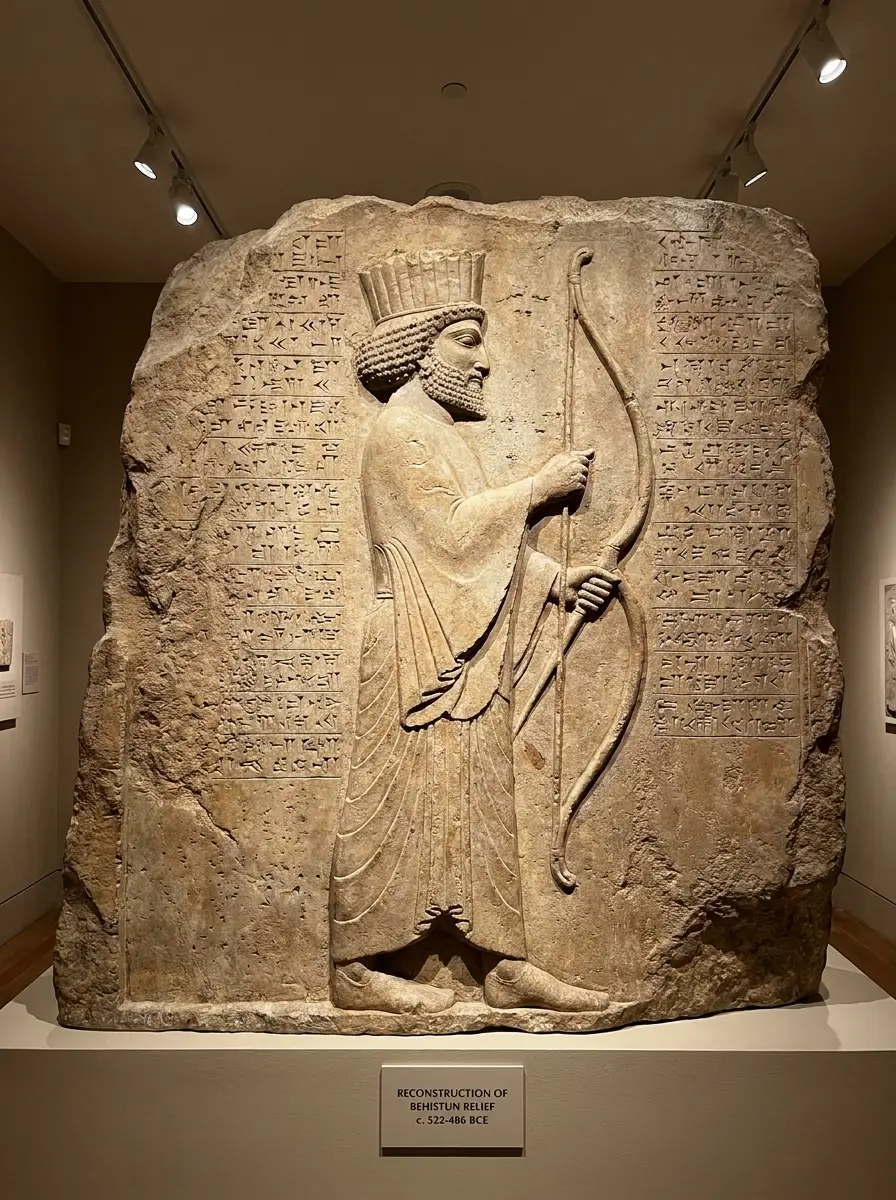
From a contemporary relief or coin

Darius I

c. 550–486 BCE
architect of imperial administration

Darius I, called Darius the Great (c. 550–486 BCE), was the third Achaemenid king, seizing power in 522 BCE after killing the alleged usurper Gaumata. After suppressing widespread revolts, he reorganized the empire into satrapies with standardized taxation, gold coinage (the daric), the Royal Road, and a postal system. He extended the empire to its greatest reach and began the palace complex at Persepolis, though his invasion of Greece ended in defeat at Marathon (490 BCE); his Behistun inscription later enabled the modern decipherment of cuneiform. A central contested point is that Darius's own account of his rise — that Gaumata was an impostor magus — is propaganda recorded by the victor, and many scholars suspect Darius was himself a usurper who fabricated the impostor story.

  • Encyclopaedia Iranica, "Darius iii. Darius I the Great"
  • Rüdiger Schmitt, The Bisitun Inscriptions of Darius the Great
  • Encyclopaedia Britannica, "Darius I"
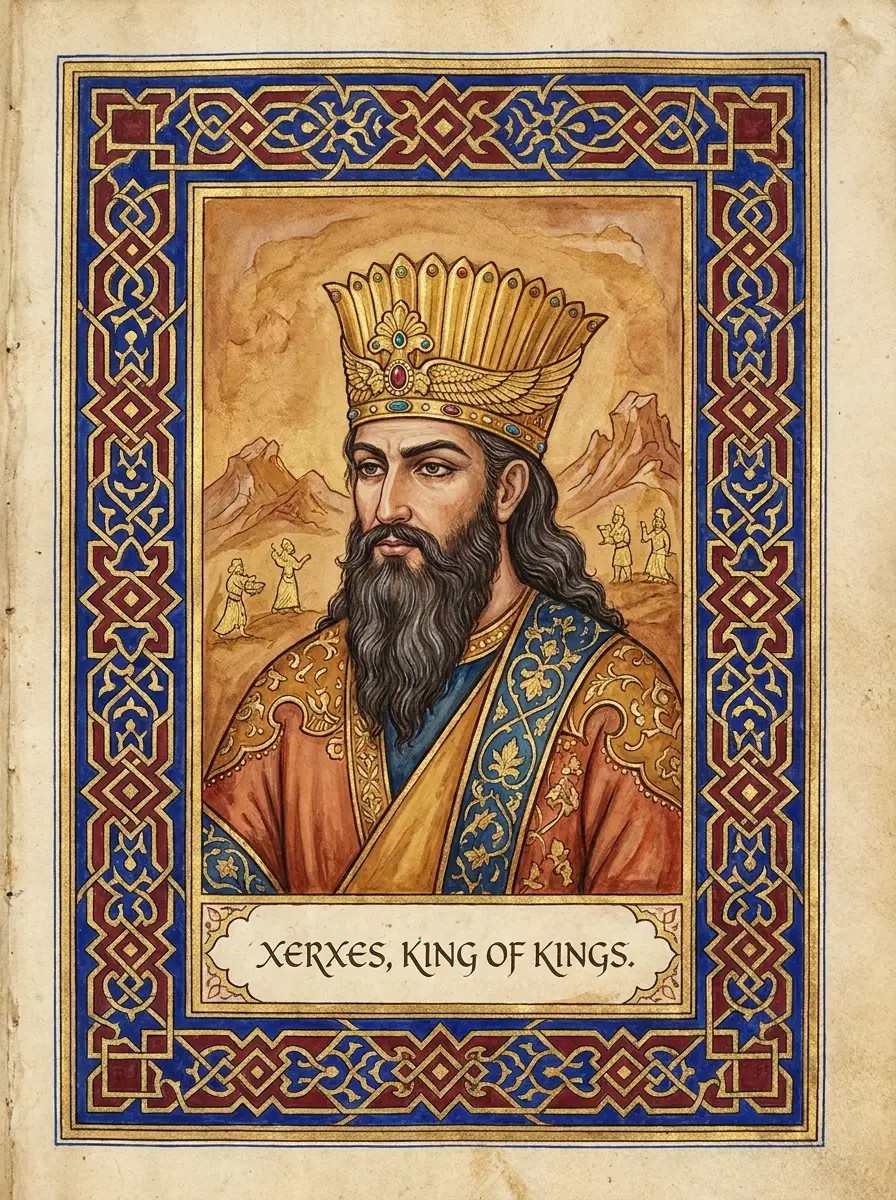
Xerxes I
Artistic reconstruction — not a documented likeness

Xerxes I

c. 519–465 BCE
king who invaded Greece

Xerxes I (c. 519–465 BCE), the fourth Achaemenid King of Kings, was the son of Darius I and Atossa (daughter of Cyrus), giving him descent from both founders of Persian power. He succeeded his father in 486 BCE, suppressed revolts in Egypt and Babylon, and is best known for his vast invasion of Greece in 480 BCE — the campaigns of Thermopylae, Salamis, and Plataea — which ultimately failed and checked Persian westward expansion. He devoted later years to monumental construction at Persepolis, completing the Gate of All Nations, before being assassinated in a palace conspiracy in 465 BCE and succeeded by Artaxerxes I. A notable nuance is that the lurid portrait of Xerxes in Greek sources (Herodotus, Aeschylus' Persae) is hostile and shaped by the Greek victory narrative, whereas Persian and Babylonian evidence presents a more conventional, capable monarch.

  • Encyclopaedia Iranica, "Xerxes"
  • Encyclopaedia Britannica, "Xerxes I"
  • Herodotus, Histories, Books 7–8 (read critically)
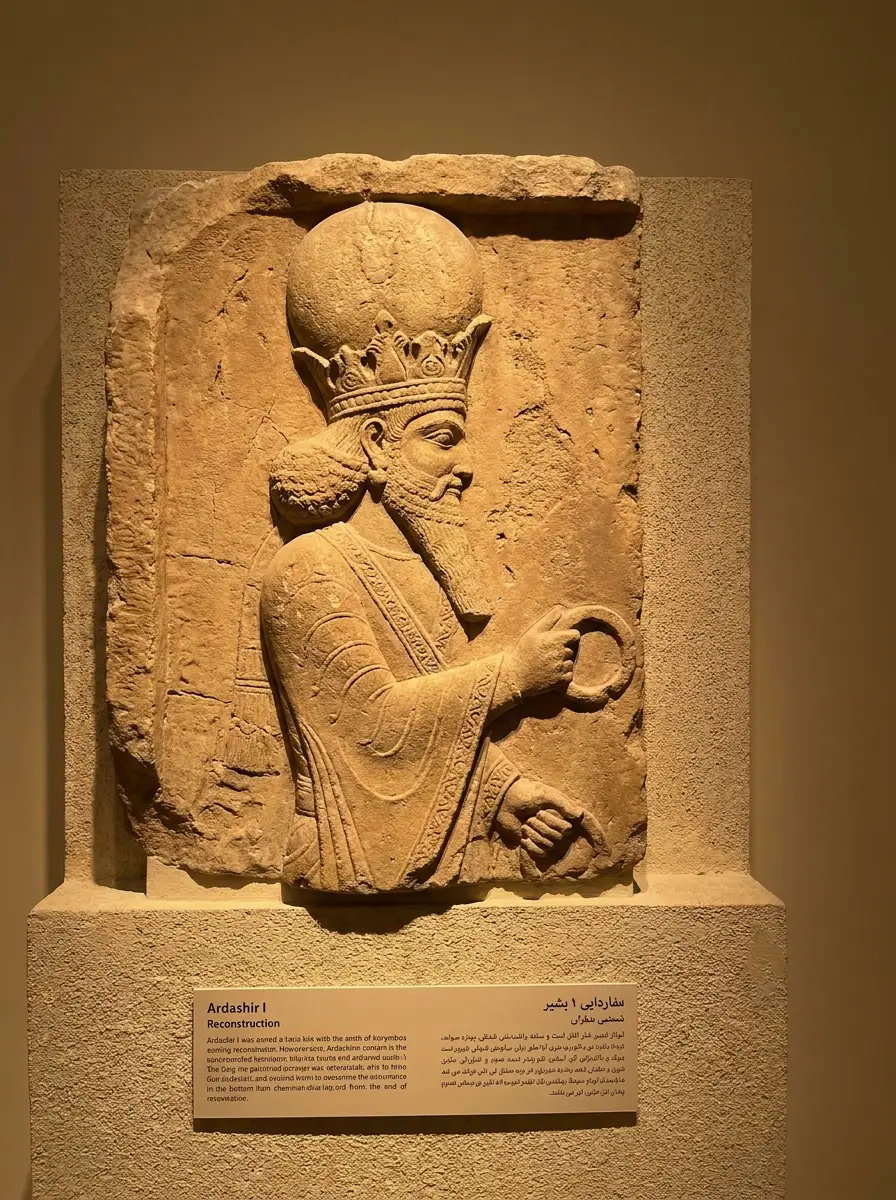
Ardashir I
From a contemporary relief or coin

Ardashir I

c. 180–242 CE
founder of the Sasanian Empire

Ardashir I (c. 180–242 CE) founded the Sasanian Empire, the last pre-Islamic Persian dynasty, by defeating the Parthian (Arsacid) king Artabanus IV at the Battle of Hormozgan in 224 CE. Beginning as a local ruler in Fars, he unified the Iranian plateau, was crowned King of Kings at Ctesiphon around 226, and established a centralized state closely tied to Zoroastrian religion. His reign set the political, religious, and artistic templates — including investiture iconography and royal titulature — followed by Sasanian rulers for four centuries. In his final years he crowned his son Shapur I as co-ruler before dying in early 242. A contested point is the precise date of his death and the length of the Ardashir–Shapur co-regency, for which the Cologne Mani Codex is the key evidence.

  • Encyclopaedia Iranica, "Ardašīr I i. History"
  • Touraj Daryaee, Sasanian Persia: The Rise and Fall of an Empire (2009)
  • Encyclopaedia Britannica, "Ardashir I"
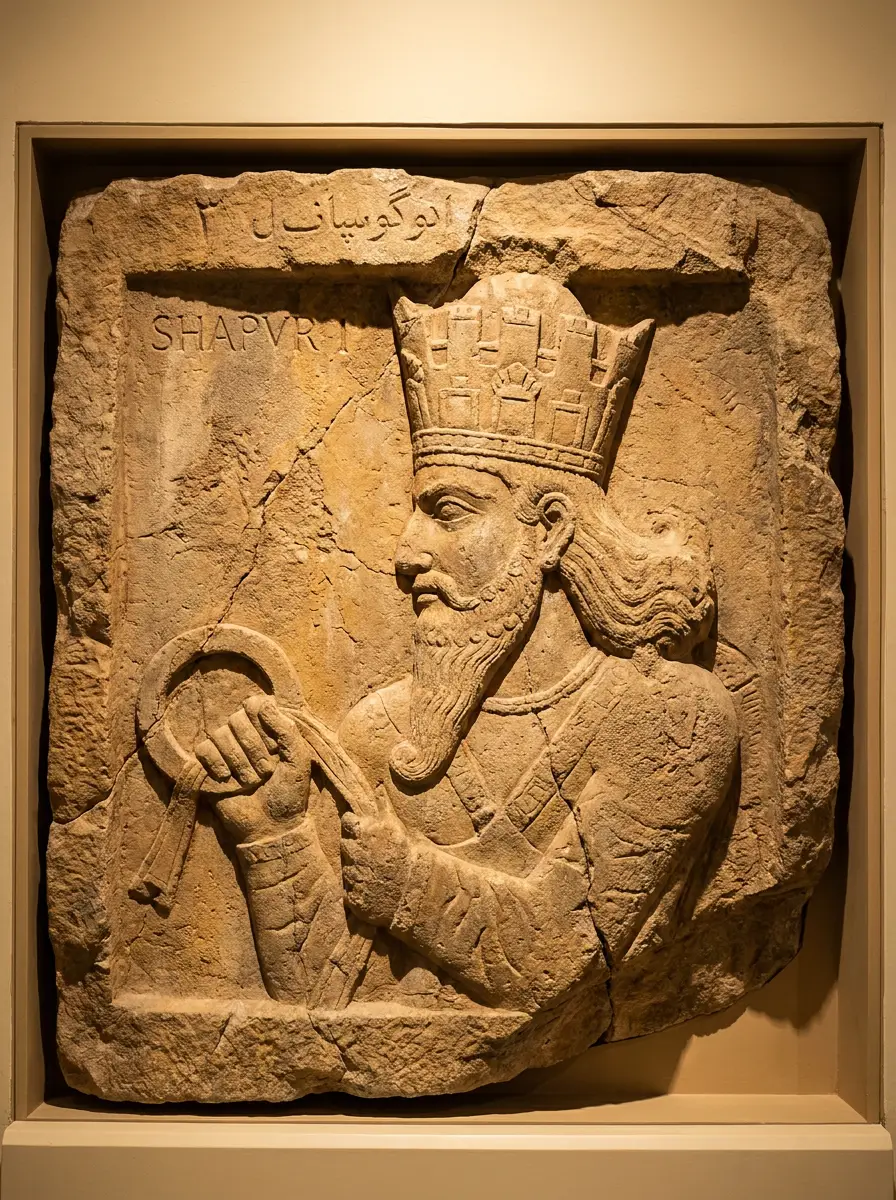
Shapur I
From a contemporary relief or coin

Shapur I

c. 215–270 CE
captor of Emperor Valerian

Shapur I (c. 215–270 CE), son of Ardashir I and the second Sasanian King of Kings, was the dynasty's great early conqueror. He waged repeated wars against Rome, achieving three signal victories: the death of Emperor Gordian III (244), a costly peace and tribute from Philip the Arab, and — most famously — the capture of Emperor Valerian alive at Edessa in 260 CE, an unprecedented humiliation for Rome. He proclaimed these triumphs in his great trilingual inscription (the Res Gestae Divi Saporis at the Ka'ba-ye Zartosht) and built the city of Bishapur using captured Roman labor; he also tolerated the prophet Mani early in his reign, allowing Manichaeism to spread. A contested point is the death of Gordian III: Shapur's inscription claims he was killed in battle, while Roman sources attribute it to a mutiny or to Philip the Arab.

  • Encyclopaedia Iranica, "Šāpūr I"
  • Res Gestae Divi Saporis (Shapur's Ka'ba-ye Zartosht inscription, primary source)
  • Encyclopaedia Britannica, "Shapur I"
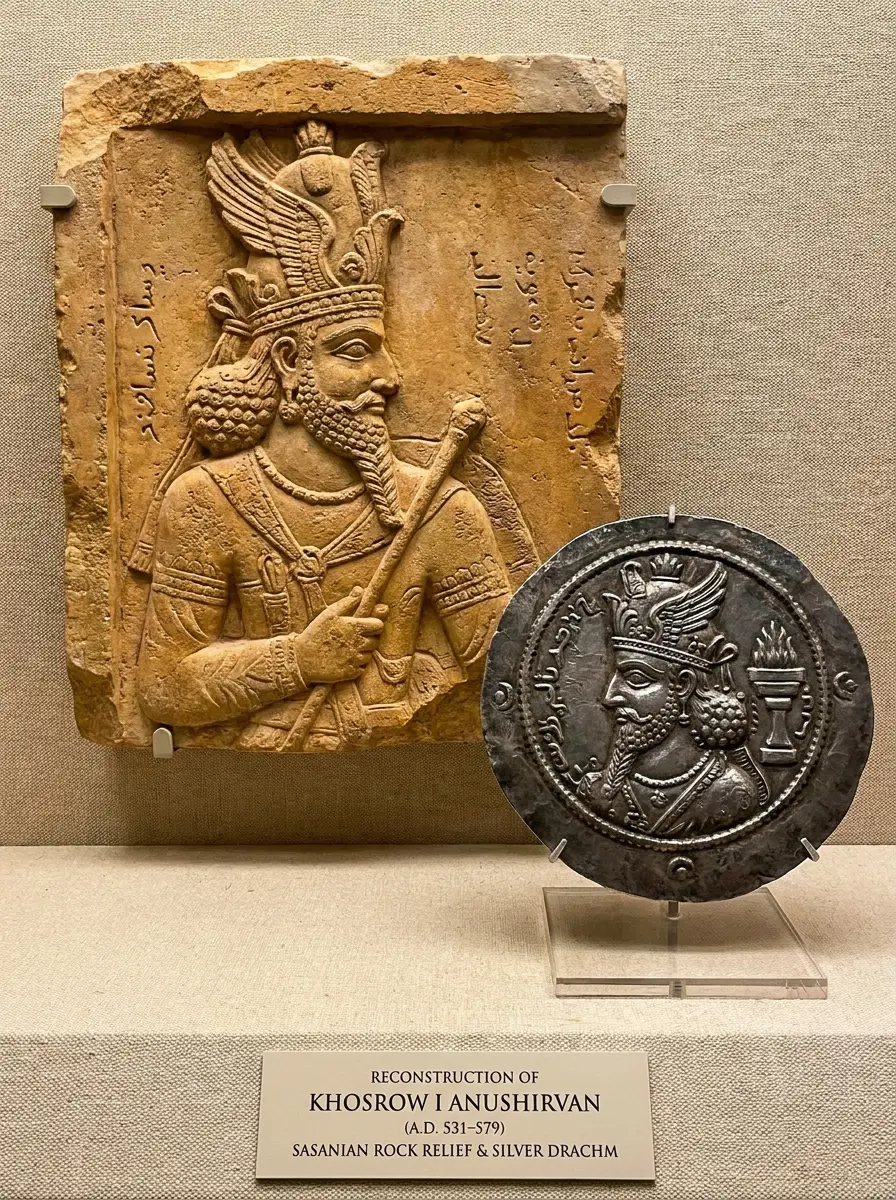
Khosrow I Anushirvan
From a contemporary relief or coin

Khosrow I Anushirvan

c. 512–579 CE
just king and great reformer

Khosrow I, byname Anushirvan ('of the Immortal Soul') and known as 'the Just' (c. 512–579 CE), was the Sasanian King of Kings who presided over the empire's late-classical zenith. Succeeding his father Kavad I in 531, he crushed the egalitarian Mazdakite movement and then carried out sweeping reforms: a cadastral survey and fixed-rate taxation, a salaried standing army, and administrative centralization. Militarily he sacked Antioch (540), destroyed the Hephthalite confederation in alliance with the Turks, and extended Persian influence into Yemen. He was also a celebrated patron of learning, credited with welcoming Greek philosophers and sponsoring translations from Sanskrit and Greek (including the introduction of chess and the Kalila wa Dimna fables). A contested point is that the attribution of the great vaulted hall Taq Kasra at Ctesiphon to his reign is traditional but uncertain and debated among scholars.

  • Encyclopaedia Iranica, "Kosrow I"
  • Arthur Christensen, L'Iran sous les Sassanides
  • Touraj Daryaee, Sasanian Persia
پیامبر محمد
By tradition, not depicted

Prophet Muhammad

c. 570–632 CE
Seal of the Prophets

Muhammad ibn Abdullah (c. 570–632 CE) was an Arab religious, social, and political leader and, in Islamic belief, the final prophet (the 'Seal of the Prophets') through whom God revealed the Qur'an. Born in Mecca and orphaned young, he worked as a merchant and married the widow Khadija before reporting his first revelations around 610 CE, conveyed by the angel Gabriel. After persecution in Mecca, he and his followers migrated to Medina in 622 (the Hijra, which begins the Islamic calendar), where he established the first Muslim community and political order. For Shia Muslims he is especially revered as the source of the Ahl al-Bayt, and Shia tradition emphasizes his designation of Ali at Ghadir Khumm during his final pilgrimage. A frequently noted nuance is the precision of the early biographical record, since the principal sources (the sira of Ibn Ishaq/Ibn Hisham) were composed generations after his death.

  • Encyclopaedia of Islam (Brill), "Muḥammad"
  • W. Montgomery Watt, Muhammad at Mecca (1953) and Muhammad at Medina (1956)
  • Encyclopaedia Britannica, "Muhammad"
امام علی
By tradition, not depicted

Imam Ali

c. 600–661 CE
first Imam, Commander of the Faithful

Ali ibn Abi Talib (c. 600–661 CE) was the cousin and son-in-law of the Prophet Muhammad, husband of Fatima, and the first Imam of Shia Islam. Raised in Muhammad's household, he was among the earliest to accept Islam and became a central figure in the early community as a warrior, judge, and counsellor. He ruled as the fourth Rashidun caliph (656–661) during the civil war known as the First Fitna and was assassinated in the mosque of Kufa by a Kharijite, Ibn Muljam. Shia Islam holds that Ali was the Prophet's divinely designated successor, pointing to the event at Ghadir Khumm, which makes the question of succession the defining doctrinal divide between Shia and Sunni Islam. The central contested point is precisely this: Shia tradition reads Ghadir Khumm as an explicit appointment to leadership, while Sunni tradition understands it as an expression of affection rather than political designation.

  • Wilferd Madelung, The Succession to Muhammad (Cambridge, 1997)
  • Encyclopaedia of Islam (Brill), "ʿAlī b. Abī Ṭālib"
  • Encyclopaedia Britannica, "Ali"
امام حسین
By tradition, not depicted

Imam Husayn

c. 626–680 CE
third Imam, martyr of Karbala

Husayn ibn Ali (c. 626–680 CE) was the younger son of Ali and Fatima and a grandson of the Prophet Muhammad, revered as the third Imam in Shia Islam. After the death of the Umayyad caliph Mu'awiya, Husayn refused to pledge allegiance to his son Yazid, whom he regarded as illegitimate, and set out toward Kufa in response to invitations from supporters. He and a small band of family and followers were besieged by Umayyad forces at Karbala, where he was killed on the tenth day of Muharram (Ashura) in 680 CE. His death transformed the early pro-Alid movement into a distinct religious community and became the emotional and devotional center of Shia identity, commemorated annually in the Muharram mourning rituals and the Arba'in pilgrimage. A noted nuance is that his stand is interpreted across a spectrum — from a bid for the caliphate to a principled, foreseen self-sacrifice against tyranny — shaping its powerful symbolic meaning.

  • Encyclopaedia of Islam (Brill), "al-Ḥusayn b. ʿAlī" (L. Veccia Vaglieri)
  • Encyclopaedia Iranica, "Ḥosayn b. ʿAli" and "Karbala"
  • Encyclopaedia Britannica, "al-Husayn ibn Ali"
امام مهدی
By tradition, not depicted

The Mahdi (Twelfth Imam)

b. 869 CE; in occultation (believed living)
twelfth Imam, the Hidden Imam

Muhammad ibn al-Hasan al-Mahdi is, in Twelver Shia belief, the twelfth and final Imam, held to have been born in 869 CE in Samarra as the son of the eleventh Imam, Hasan al-Askari. According to Twelver doctrine he became Imam as a young child upon his father's death in 874 CE and was concealed by God in a state known as occultation (ghayba). His Minor Occultation (874–941) was a period in which he communicated with his community through four successive deputies; the Major Occultation that followed continues to the present, during which religious scholars guide the Shia community in his absence. He is identified with the awaited Mahdi, the messianic restorer believed destined to fill the world with justice, making him central to Shia eschatology and the doctrine of just leadership. The contested point is that non-Shia historical sources record Hasan al-Askari's death without a known successor, leading some historians to question whether he had a son, while Twelver tradition explains the absence of record as deliberate concealment.

  • Encyclopaedia Iranica, "Ḡayba (Occultation)"
  • Jassim M. Hussain, The Occultation of the Twelfth Imam (1982)
  • Encyclopaedia Britannica, "Muhammad al-Mahdi al-Hujjah"
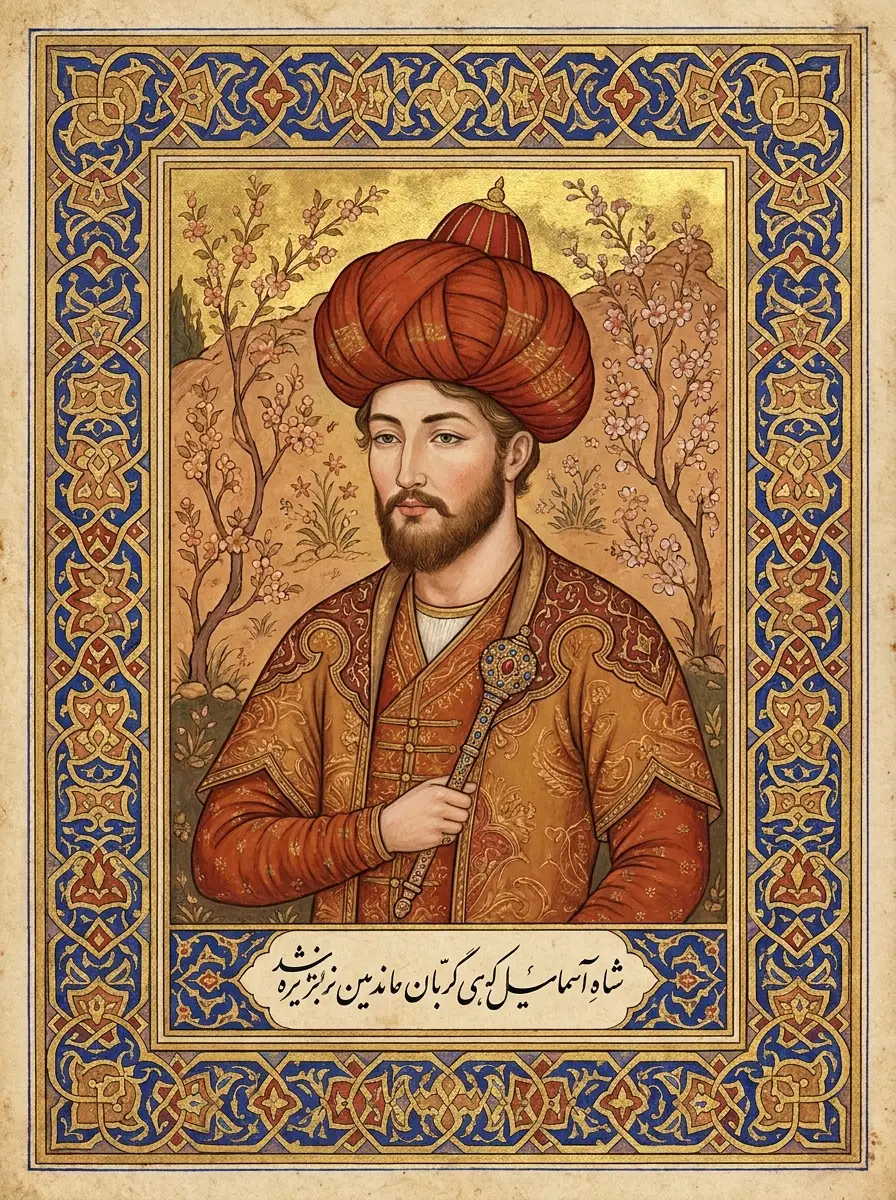
Shah Ismail I
Artistic reconstruction — not a documented likeness

Shah Ismail I

1487–1524
founder of Safavid Iran

Ismail I (1487–1524) was the founder and first shah of the Safavid dynasty — a youth of mixed Turkmen, Kurdish, Greek, and Georgian descent who seized Tabriz in 1501 at about age fourteen as head of the militant Safaviyya Sufi order and its Qizilbash followers. He proclaimed Twelver Shiism the official state religion, a transformative act that durably distinguished Iran from its Sunni Ottoman and Uzbek neighbors and laid a foundation of the modern Iranian state. Revered by his Qizilbash as a near-divine figure, he also composed mystical poetry in Azeri Turkish under the pen name 'Khatai.' His aura of invincibility was shattered at the Battle of Chaldiran (1514), where Ottoman artillery and firearms under Selim I crushed his cavalry. A notable nuance is that scholars debate how genuinely 'Iranian-national' his project was versus a millenarian Turkmen religious movement, and read Chaldiran as a psychological turning point that left him withdrawn for his final decade.

  • Roger Savory, Iran under the Safavids (Cambridge University Press)
  • Encyclopaedia Iranica, "Esmāʿīl I Ṣafawī"
  • Encyclopaedia Britannica, "Ismail I"
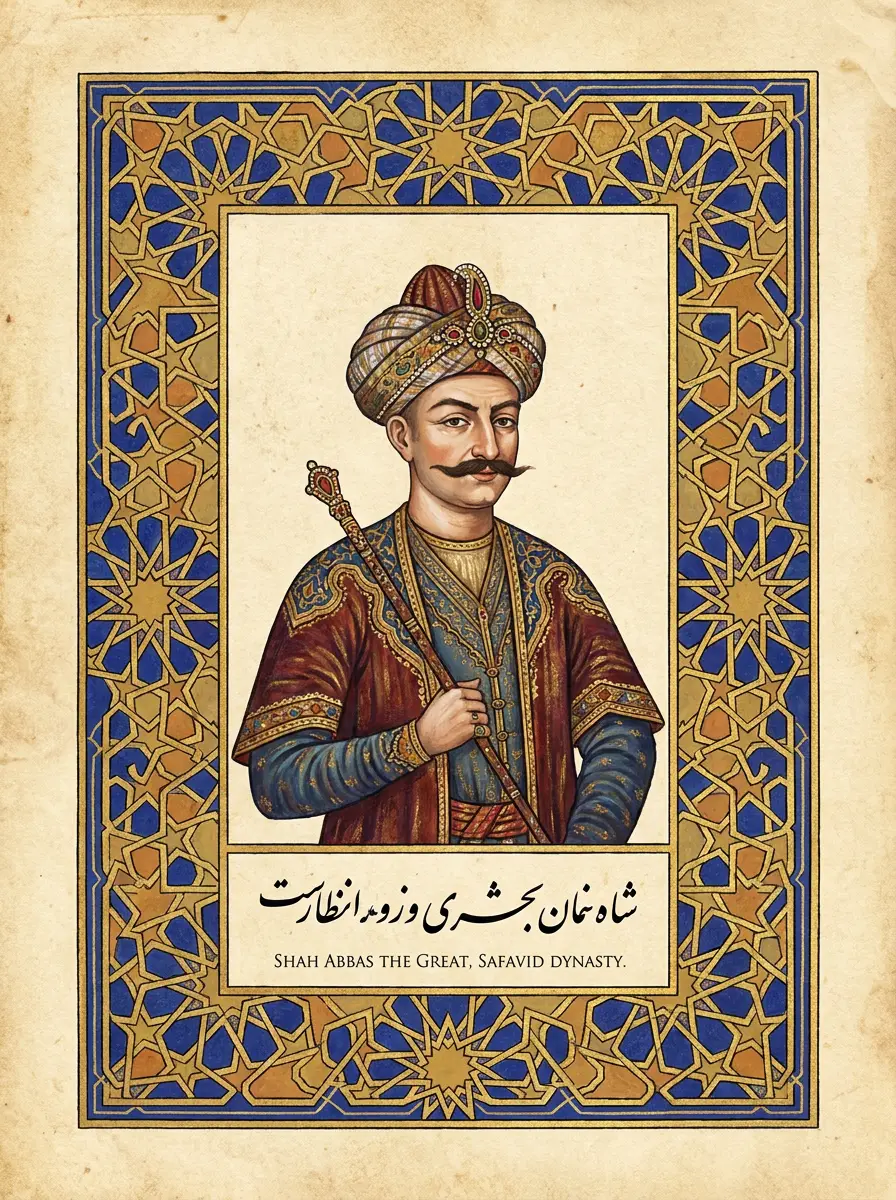
Shah Abbas I
Artistic reconstruction — not a documented likeness

Shah Abbas I

1571–1629
greatest of the Safavid shahs

Abbas I, Abbas the Great (1571–1629), the fifth Safavid shah, came to the throne in 1588 amid Ottoman and Uzbek encroachment and Qizilbash factionalism, and is generally regarded as the dynasty's most capable ruler. He curbed the unruly Qizilbash by building a standing army of ghulams (slave-soldiers, largely of Caucasian origin) equipped with firearms and artillery, then expelled Ottoman and Uzbek forces and recovered lost territory. In 1598 he moved the capital from Qazvin to Isfahan, which he rebuilt into one of the world's most magnificent cities centered on the Naqsh-e Jahan square, and he promoted trade (notably the silk monopoly and ties with Europe), the arts, and architecture. A contested point is that Abbas secured his rule through ruthless dynastic violence — blinding or killing several of his own sons and kinsmen — which strengthened his reign but contributed to a weakened succession after him.

  • Roger Savory, Iran under the Safavids
  • Encyclopaedia Iranica, "ʿAbbās I"
  • Eskandar Beg Monshi, Tarikh-e ʿAlam-ara-ye ʿAbbasi (trans. Savory)
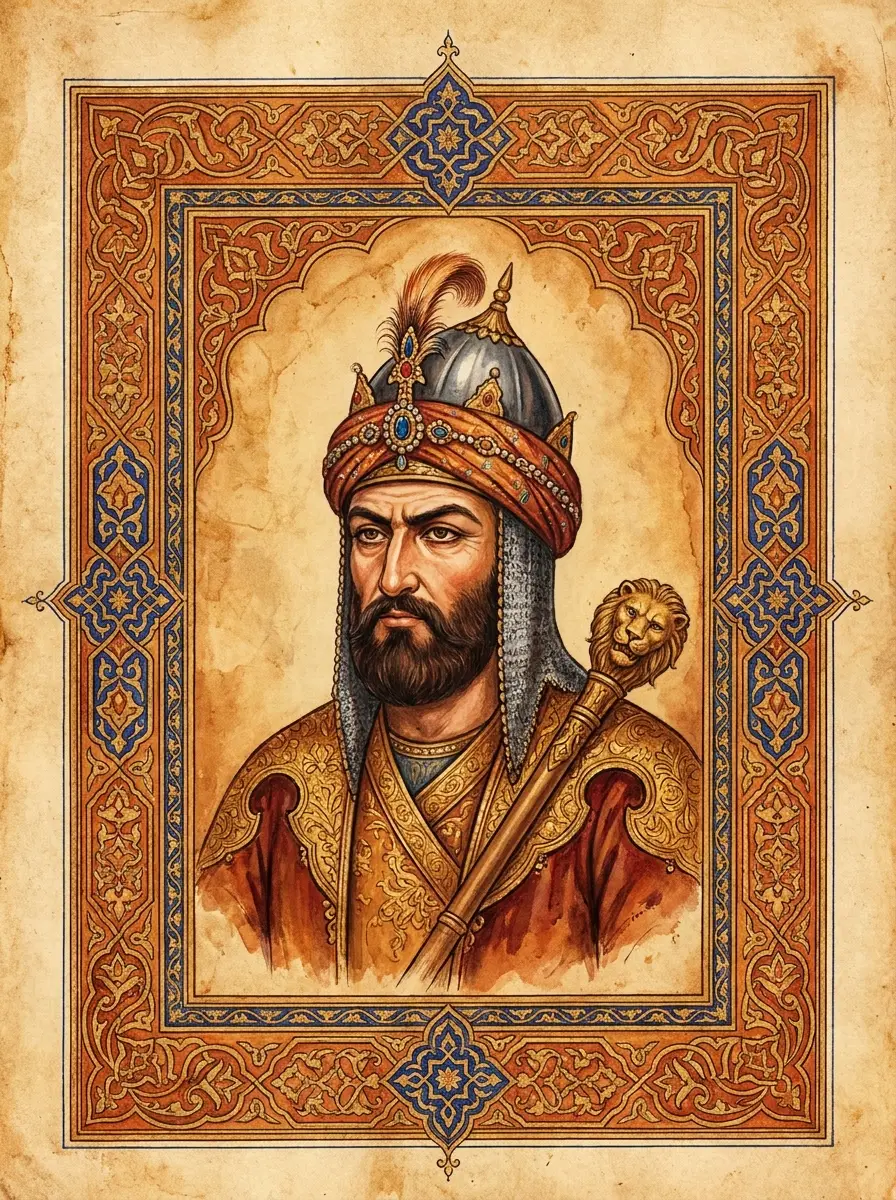
Nader Shah
Artistic reconstruction — not a documented likeness

Nader Shah

c. 1688–1747
conqueror and military genius

Nader Shah Afshar (c. 1688–1747) rose from humble Turkmen Afshar origins to become a brilliant military commander who expelled the Afghan invaders that had toppled the Safavids, drove out Ottoman and Russian forces, and restored Iran's territorial integrity before crowning himself shah in 1736 and founding the short-lived Afsharid dynasty. His most spectacular campaign was the 1738–39 invasion of Mughal India: he routed the Mughal army at Karnal and sacked Delhi in 1739, carrying off immense plunder including the Peacock Throne and the Koh-i-Noor and Darya-ye Noor diamonds, though Delhi suffered a devastating massacre. A notable nuance is that he attempted to reconcile Shia and Sunni Islam (proposing Twelver Shiism as a fifth 'Jaʿfari' Sunni school), a reform that largely failed; his later years descended into paranoia and cruelty — including the blinding of his own son — and ended in his assassination by his own officers. His birth year is genuinely disputed (1688 vs. 1698).

  • Michael Axworthy, The Sword of Persia: Nader Shah (2006)
  • Encyclopaedia Iranica, "Nāder Shah"
  • Cambridge History of Iran, vol. 7 (Peter Avery et al.)
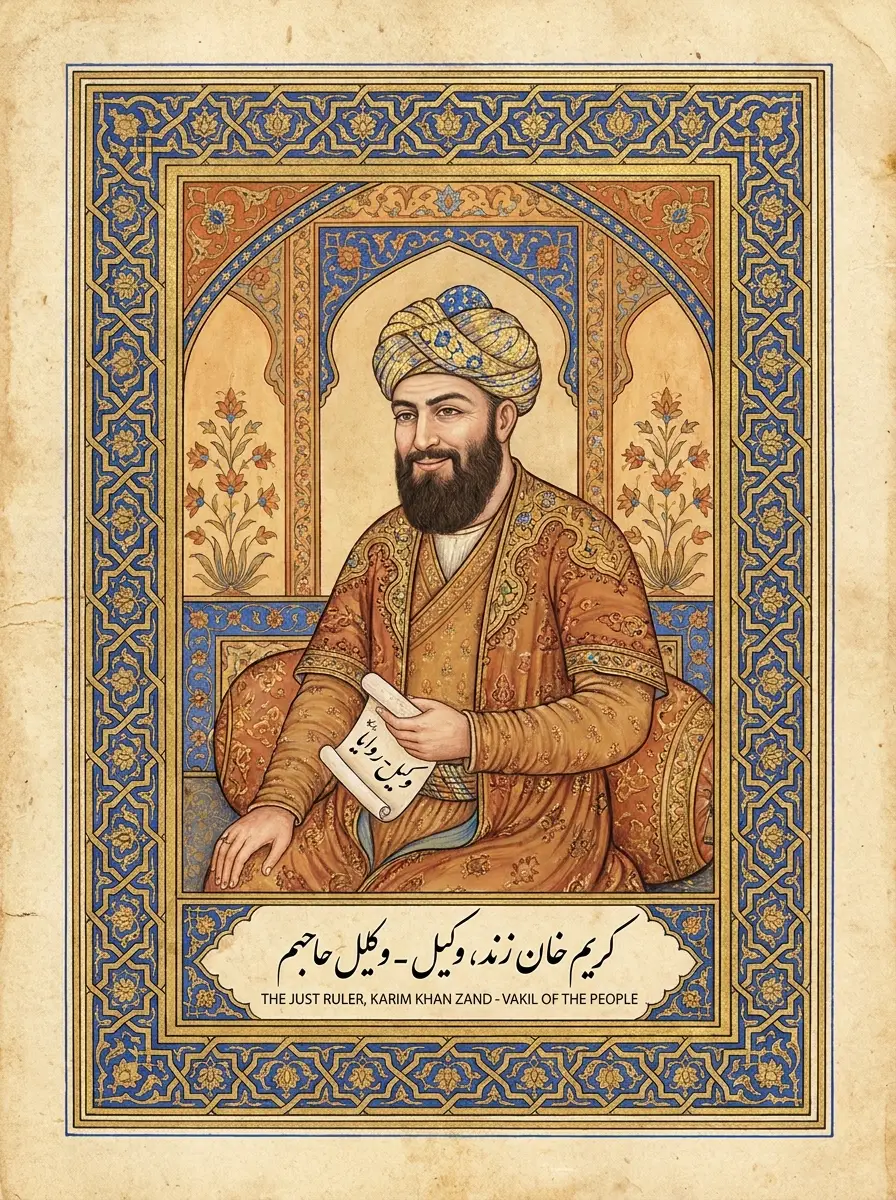
Karim Khan Zand
Artistic reconstruction — not a documented likeness

Karim Khan Zand

c. 1705–1779
the Vakil who ruled from Shiraz

Karim Khan Zand (c. 1705–1779) was the founder and principal ruler of the Zand dynasty, a chieftain of the Lak/Zand tribe who, after the chaos following Nader Shah's death, gradually overcame his rivals to control most of Iran except Khorasan. Distinctively, he declined the title of shah, ruling instead as Vakil al-Raʿaya ('Deputy/Advocate of the People') — nominally as regent for a Safavid figurehead — a stance later historians often cite as evidence of unusual modesty and concern for legitimacy. He made Shiraz his capital and adorned it with major public works, including the Vakil Bazaar, Vakil Mosque, and the Arg citadel, and his reign of roughly 1765–1779 is remembered as a rare interval of peace, recovery, and relatively benign, low-tax governance. A nuance is that his benevolent, almost folkloric reputation is partly burnished by contrast with the violence before and after him; his realm fragmented quickly after his death, leading to the Zand–Qajar wars won by Agha Mohammad Khan Qajar.

  • John R. Perry, Karim Khan Zand: A History of Iran, 1747–1779 (1979)
  • Encyclopaedia Iranica, "Zand Dynasty"
  • Encyclopaedia Britannica, "Karim Khan Zand"
ن
Documented photographs exist in archives
long-reigning modernizing Qajar shah

Naser al-Din Shah Qajar (1831–1896), the fourth Qajar shah and, at nearly 48 years, one of the longest-reigning monarchs in Iranian history, came to the throne in 1848. Guided early on by his reformist chief minister Amir Kabir — whom he later had executed — he opened with modernizing impulses (the Dar al-Funun polytechnic, a telegraph network, newspapers, and three trips to Europe) but grew increasingly conservative and failed to manage the mounting pressures of Russian and British imperial rivalry. His granting of sweeping economic concessions to foreigners, above all the 1890 Tobacco Concession, provoked a nationwide protest and boycott (the Tobacco Movement) that forced its cancellation and foreshadowed the Constitutional Revolution. He was assassinated in 1896 by Mirza Reza Kermani, a follower of Jamal al-Din al-Afghani, at the Shah Abdol-Azim shrine. A notable nuance is that he was a genuine enthusiast and patron of photography — establishing a court studio at the Golestan Palace and personally taking photographs — so his reign is unusually well documented visually.

  • Encyclopaedia Iranica, "Nāṣer-al-Din Shah"
  • Encyclopaedia Britannica, "Nāṣer al-Dīn Shah"
  • Cambridge History of Iran, vol. 7 (Qajar chapters)
ر
Documented photographs exist in archives

Reza Shah

1878–1944
founder of the Pahlavi dynasty

Reza Shah Pahlavi (1878–1944), born Reza Khan, was a military officer who rose through the Persian Cossack Brigade, led a coup that seized Tehran in February 1921, and was crowned shah in 1925 after the Majlis deposed the last Qajar monarch. Over sixteen years he pursued an ambitious program of centralization and modernization: the Trans-Iranian Railway, road networks, a modern conscript army, secular courts, the University of Tehran, and a national education system. His reforms also included coercive measures such as the 1936 ban on the public veil and the suppression of tribal and clerical autonomy, which remain contested. After the Anglo-Soviet invasion of 1941 — prompted partly by Allied concerns over his perceived tilt toward Germany — he was forced to abdicate in favor of his son and died in exile in South Africa in 1944. He is widely regarded as the architect of the modern Iranian state, though scholars debate the authoritarian character and uneven social costs of his rule.

  • Ervand Abrahamian, A History of Modern Iran (Cambridge University Press)
  • Encyclopaedia Iranica, "Reza Shah Pahlavi"
  • Encyclopaedia Britannica, "Reza Shah Pahlavi"
م
Documented photographs exist in archives
the last Shah of Iran

Mohammad Reza Pahlavi (1919–1980), Iran's last reigning monarch, succeeded his father in September 1941 after the Anglo-Soviet invasion and ruled for nearly four decades. His tenure included the 1951–53 confrontation with Prime Minister Mossadegh over oil nationalization — during which he briefly fled before being restored by the CIA/MI6-backed 1953 coup — and the 1963 'White Revolution,' a state-led reform package that extended suffrage to women, redistributed land, and accelerated industrialization. Using rising oil revenues he pursued rapid development and military buildup while concentrating power and relying on the SAVAK security service, drawing sustained criticism over political repression and human rights. Mounting discontent culminated in the 1979 Islamic Revolution; he left Iran in January 1979 and died in exile in Cairo in 1980. His legacy is sharply contested: admirers emphasize modernization and secular reform, while critics emphasize authoritarianism and dependence on foreign powers.

  • Ervand Abrahamian, Iran Between Two Revolutions (Princeton University Press)
  • Encyclopaedia Iranica, "Mohammad Reza Shah Pahlavi"
  • Encyclopaedia Britannica, "Mohammad Reza Shah Pahlavi"
م
Documented photographs exist in archives
architect of oil nationalization

Mohammad Mossadegh (1882–1967) was a European-educated jurist and nationalist politician who entered public life after the Constitutional Revolution and served as parliamentarian, provincial governor, and cabinet minister before becoming prime minister in 1951. He led the movement to nationalize Iran's oil industry, ending the concession of the British-controlled Anglo-Iranian Oil Company; the nationalization law passed the Majlis in March 1951. His government became the focus of an international standoff, including a British-led oil embargo, and in August 1953 he was removed in a coup organized with covert CIA and British support (Operation Ajax/TPAJAX). He was convicted of treason, briefly imprisoned, and spent the rest of his life under house arrest until his death in 1967. He remains a contested symbol — revered by many Iranians as a champion of national sovereignty and democracy, while critics question his political tactics and confrontation with the monarchy; the 1953 coup is widely cited in scholarship on foreign intervention.

  • Ervand Abrahamian, The Coup: 1953, the CIA, and the Roots of Modern U.S.–Iranian Relations (2013)
  • Encyclopaedia Iranica, "Mossadegh, Mohammad"
  • Encyclopaedia Britannica, "Mohammad Mossadegh"
ر
Documented photographs exist in archives

Ruhollah Khomeini

c. 1902–1989
founder of the Islamic Republic

Ruhollah Khomeini (c. 1902–1989) was a Twelver Shia cleric, marjaʿ (source of emulation), and theorist who became the leader of the 1979 revolution that overthrew the monarchy and established the Islamic Republic of Iran. He developed and institutionalized the doctrine of velayat-e faqih ('guardianship of the jurist'), elaborated in his 1970 work Islamic Government, which placed ultimate authority in a qualified religious jurist and became the constitutional foundation of the new state. Exiled from 1964 (in Iraq and later France) for opposing the Shah, he returned in February 1979 to lead the post-revolutionary order and served as its first Supreme Leader until his death. His decade in power encompassed the consolidation of clerical rule, the 1979–81 U.S. embassy hostage crisis, the 1980–88 Iran–Iraq War, and the 1988 mass executions of political prisoners — events that remain central to debates over his legacy. His birth year is itself a contested point, with sources giving 1900 or 1902.

  • Ervand Abrahamian, Khomeinism: Essays on the Islamic Republic (University of California Press)
  • Encyclopaedia Iranica, "Khomeini, Ruhollah"
  • Encyclopaedia Britannica, "Ruhollah Khomeini"
ع
Documented photographs exist in archives

Ali Khamenei

1939–2026 (death reported Feb 2026)
second Supreme Leader of Iran

Ali Hosseini Khamenei (b. 1939) studied in the seminaries of Mashhad and Qom — where he attended Khomeini's classes — and became active in opposition to the Shah, for which he was repeatedly arrested and exiled. After the revolution he held senior posts, survived a 1981 assassination attempt, and served as Iran's third president from 1981 to 1989, covering most of the Iran–Iraq War. Following Khomeini's death, the Assembly of Experts elevated him to Supreme Leader in June 1989 (reconfirmed in August after a constitutional amendment removed the marjaʿ requirement), and for over three decades he was the central figure of the Iranian state, overseeing security, foreign policy, and the nuclear program — a deeply polarizing figure viewed by supporters as guardian of the revolution and by critics as the head of an authoritarian system. According to Iranian state media and international outlets, Khamenei was killed in an Israeli airstrike on 28 February 2026 during the 2026 war (his death confirmed 1 March), and his son Mojtaba Khamenei was named as the succeeding Supreme Leader in March 2026; these reports are recent and sensitive and should be presented with attribution rather than as settled fact.

  • Encyclopaedia Britannica, "Ali Khamenei"
  • Al Jazeera, "Iran names Mojtaba Khamenei as new supreme leader" (March 2026)
  • RAND Commentary, "Who—or What—Will Replace Iran's Supreme Leader Ali Khamenei?" (March 2026)
ح
Documented photographs exist in archives
dissident grand ayatollah

Hossein-Ali Montazeri (1922–2009) was a Grand Ayatollah and one of the most senior religious authorities of the Islamic Republic, a close student of Khomeini who helped draft the post-revolutionary constitution and championed velayat-e faqih. In November 1985 the Assembly of Experts formally designated him as Khomeini's successor as Supreme Leader. He broke with the leadership over human-rights concerns — most decisively his protest against the 1988 mass execution of political prisoners, which he condemned in letters to Khomeini and to the prosecution commission — and was stripped of his succession role in 1989, the post passing to Khamenei. He spent later years under restrictions, including a period of house arrest, becoming a prominent clerical critic of the state who notably challenged the official results of the 2009 presidential election. He is a contested figure: regarded by reformists and rights advocates as a clerical conscience, and by the establishment as a dissident who departed from the revolution's line.

  • Encyclopaedia Iranica, "Montazeri, Hossein-Ali"
  • Encyclopaedia Britannica, "Hossein-Ali Montazeri"
  • PBS Frontline / Tehran Bureau, "Grand Ayatollah Hossein Ali Montazeri: 1922–2009"
ر
Documented photographs exist in archives
exiled Pahlavi heir and activist

Reza Pahlavi (b. 1960) is the eldest son of the last Shah, Mohammad Reza Pahlavi, and Empress Farah, designated Crown Prince at his father's 1967 coronation. He left Iran for U.S. Air Force pilot training in 1978 and, following the 1979 revolution and his father's death in 1980, has lived in exile — primarily in the Washington, D.C., area — where he earned a degree in political science from the University of Southern California. He has spent his adult life as a prominent opposition figure advocating a secular, democratic Iran and a transition away from the Islamic Republic, while stating he does not seek to restore the monarchy by fiat but to let Iranians choose their system. He has gained renewed visibility during periods of Iranian unrest and in November 2024 announced a 'five-pillar' transition framework. He is a contested figure: supported by some in the diaspora as a unifying opposition symbol, while critics question the breadth of his domestic backing and his dynastic association.

  • Encyclopaedia Britannica, "Reza Pahlavi"
  • Encyclopaedia Iranica (Pahlavi family entries)
  • NPR/BBC reporting on Reza Pahlavi and Iran protests (2024–2026)
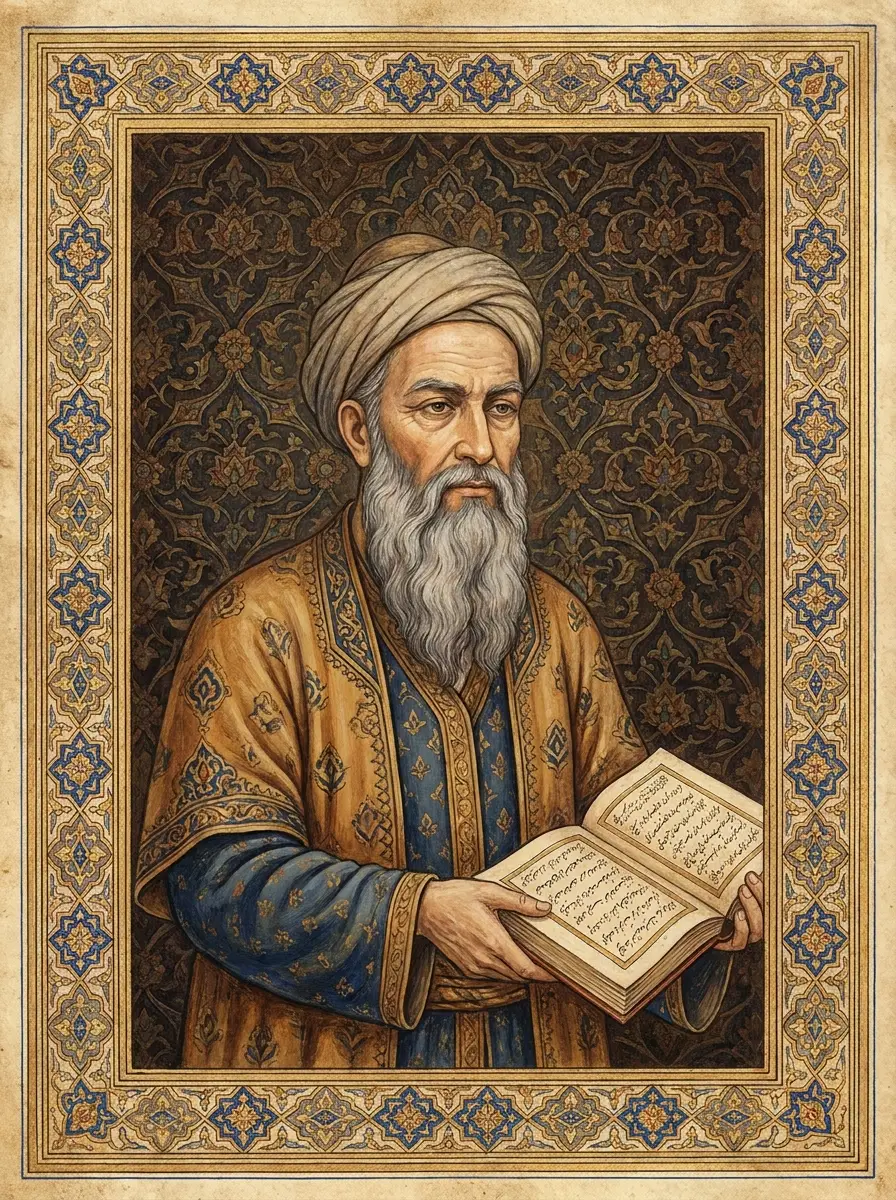
Ferdowsi
Artistic reconstruction — not a documented likeness

Ferdowsi

c. 940–1020
poet of the Shahnameh

Abolqasem Ferdowsi (c. 940–1020) was a Persian poet born near Tus in Khorasan, traditionally to a family of land-owning gentry (dehqan). He devoted roughly three decades (c. 977–1010) to composing the Shahnameh ('Book of Kings'), an epic of some 50,000 couplets recounting the mythical and historical past of the Iranian world from creation to the Arab conquest. The work is celebrated for consciously preserving the Persian language and identity, drawing heavily on pre-Islamic vocabulary and minimizing Arabic loanwords, and it is among the longest epic poems by a single author, becoming foundational to Persian national consciousness. A persistent though likely embellished tradition holds that the Ghaznavid sultan Mahmud underpaid Ferdowsi, leaving the poet embittered — a story whose details scholars treat with caution. His death year is unsettled, with 1019, 1020, and 1025 all appearing in the sources.

  • Encyclopaedia Iranica, "Ferdowsi, Abu'l-Qāsem i. Life" (A. Sh. Shahbazi)
  • Encyclopaedia Britannica, "Ferdowsī"
  • Dick Davis (translator), Shahnameh: The Persian Book of Kings
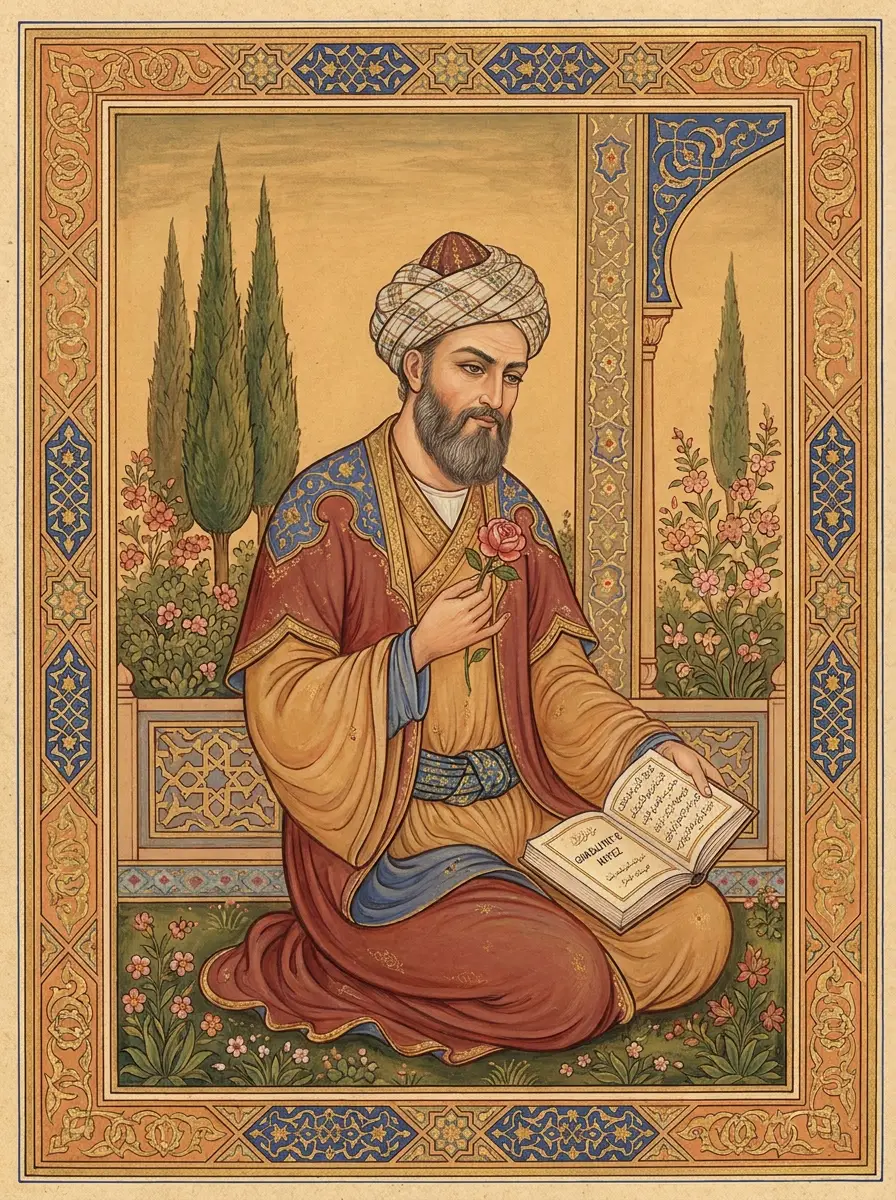
Hafez
Artistic reconstruction — not a documented likeness

Hafez

c. 1315–1390
master of the Persian ghazal

Khwaja Shams al-Din Muhammad Hafez of Shiraz (c. 1315–1390) was a lyric poet whose Divan — a collection of several hundred ghazals — is widely regarded as the summit of the Persian lyric tradition. His verse fuses themes of love, wine, mystical longing, and sharp critique of religious hypocrisy in a style prized for an ambiguity that sustains both worldly and Sufi readings. He took the pen name 'Hafez' (one who has memorized the Qur'an) and lived under the Injuid and Muzaffarid dynasties, enjoying intermittent courtly patronage. Reliable biographical detail is scarce — the early tazkiras are considered largely anecdotal and unreliable, so most 'facts' about his life are cautiously reconstructed from his poems — and even his dates are disputed (birth 1315 or 1317, death 1389 or 1390). His Divan remains a beloved fixture of Iranian culture, still used for bibliomancy (fāl-e Hāfez).

  • Encyclopaedia Iranica, "Hafez ii. Hafez's Life and Times"
  • Encyclopaedia Britannica, "Hafez"
  • Moḥammad Moʿin and Qāsem Ḡani (on the disputed dates)
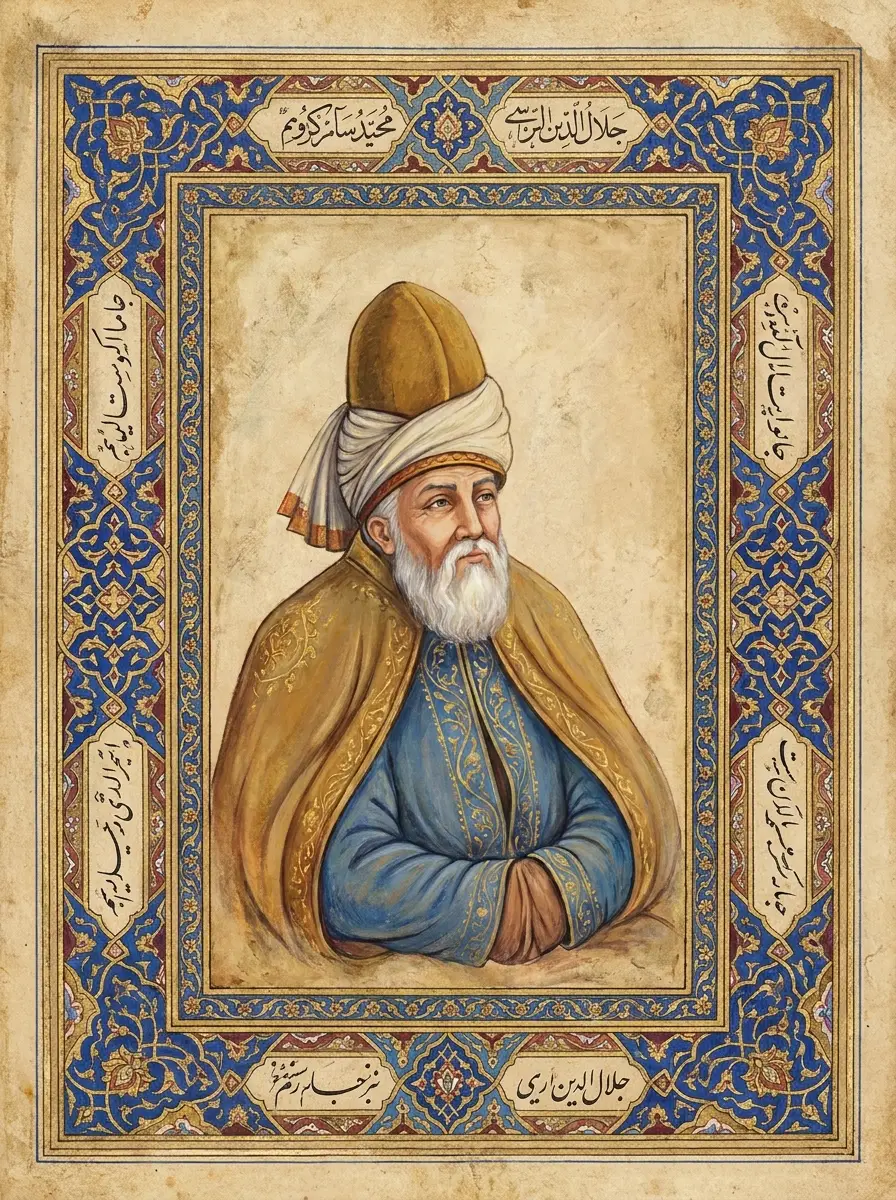
Rumi
Artistic reconstruction — not a documented likeness

Rumi

1207–1273
Sufi poet of divine love

Jalal al-Din Muhammad Rumi, known as Mowlana and Rumi (1207–1273), was a Persian-language poet, jurist, and Sufi mystic whose family originated in Balkh and migrated westward (c. 1218) ahead of the Mongol advance, eventually settling in Konya in Anatolia (Rum, hence 'Rumi'). He succeeded his father as a religious teacher, but his life was transformed around 1244 by his encounter with the wandering dervish Shams-e Tabrizi, which catalyzed his turn to ecstatic poetry. His major works are the Masnavi-ye Maʿnavi (some 25,000 couplets of didactic mystical narrative, dictated to his disciple Hosam al-Din) and the lyrical Divan-e Shams-e Tabrizi, and he inspired the Mevlevi ('whirling dervish') order founded by his followers after his death. A contested modern point is his cultural 'ownership' — Iran, Turkey, and Afghanistan each claim him — and his popular Western image often downplays the Islamic and Qur'anic grounding of his work.

  • Encyclopaedia Iranica, "Rumi, Jalāl-al-Din"
  • Encyclopaedia Britannica, "Rumi"
  • Franklin Lewis, Rumi: Past and Present, East and West (2000)
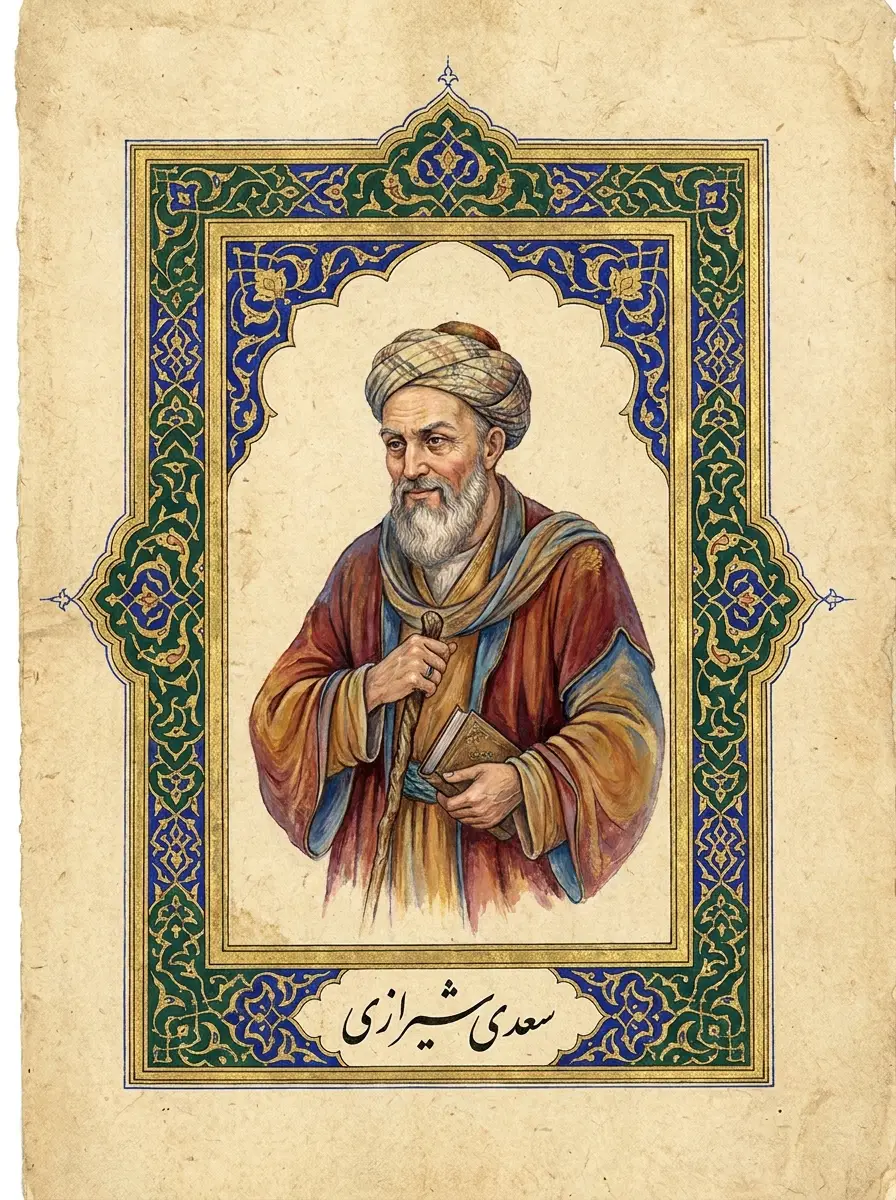
Saadi
Artistic reconstruction — not a documented likeness

Saadi

c. 1210–1291/2
poet of the Golestan and Bustan

Abu Muhammad Mosleh al-Din Saadi of Shiraz (c. 1210–1291/2) was a poet and prose stylist, traditionally said to have studied at the Nizamiyya in Baghdad before decades of travel across the Islamic world during the turbulent Mongol era. His two masterpieces are the Bustan ('The Orchard,' completed 1257), a verse work on ethics and virtue, and the Golestan ('The Rose Garden,' completed 1258), a mix of prose and verse blending moral instruction, anecdote, and worldly wisdom. His writing is admired for its clarity, wit, and humane practical ethics, and lines from it (such as the Bani Adam verse on the unity of humankind) became proverbial. The dates of these two books are the firmest anchors in his biography, since his birth and death years rest on later, less reliable accounts. He profoundly shaped Persian prose and remains a staple of literary education.

  • Encyclopaedia Iranica, "Saʿdi"
  • Encyclopaedia Britannica, "Saʿdī"
  • Saeed Nafisi (on the disputed death date)
Omar Khayyam
Artistic reconstruction — not a documented likeness

Omar Khayyam

1048–1131
poet-mathematician of Nishapur

Ghiyath al-Din Abu'l-Fath Omar ibn Ibrahim al-Khayyam (1048–1131) was a Persian polymath from Nishapur, renowned in his own lifetime not as a poet but as a mathematician and astronomer. He wrote one of the most important pre-modern treatises on algebra, advancing the geometric solution of cubic equations, and was summoned by the Seljuk sultan Malik-Shah to reform the calendar, producing the highly accurate Jalali calendar. He is known in the West chiefly through the Rubaiyat, a collection of skeptical, epicurean quatrains popularized by Edward FitzGerald's free 1859 English adaptation. A major scholarly controversy concerns authenticity: the quatrains circulated anonymously and orally, none securely datable to his lifetime, and over a thousand later accreted under his name, so estimates of which verses are genuinely his vary widely.

  • Encyclopaedia Britannica, "Omar Khayyam"
  • MacTutor History of Mathematics, "Omar Khayyam"
  • Ali Dashti, In Search of Omar Khayyam (1971)
Avicenna (Ibn Sina)
Artistic reconstruction — not a documented likeness

Avicenna (Ibn Sina)

c. 980–1037
philosopher-physician of the Canon

Abu Ali al-Husayn ibn Sina (c. 980–1037), known in Latin Europe as Avicenna, was a Persian polymath born near Bukhara (then in the Samanid realm, today Uzbekistan) and the preeminent philosopher-physician of the Islamic Golden Age. A prodigy who served as court physician and administrator to a succession of Iranian rulers, he authored over 250 works. His medical encyclopedia, al-Qanun fi'l-Tibb (The Canon of Medicine), systematized Greco-Islamic medicine and was used as a standard textbook in Europe and the Islamic world into the early modern period, while his philosophical summa al-Shifa (The Cure) decisively shaped both Islamic philosophy and European Scholasticism, especially debates on essence, existence, and the soul. He notably anticipated ideas about contagion and the isolation of the sick. A long-debated point is his religious-philosophical positioning: his Neoplatonized Aristotelianism drew the sustained critique of al-Ghazali, making him a touchstone in the rationalism-versus-revelation debate.

  • Internet Encyclopedia of Philosophy, "Avicenna (Ibn Sina)"
  • Encyclopaedia Iranica, "Avicenna"
  • Encyclopaedia Britannica, "Avicenna"
Al-Ghazali
Artistic reconstruction — not a documented likeness

Al-Ghazali

c. 1058–1111
Proof of Islam, theologian and mystic

Abu Hamid Muhammad al-Ghazali (c. 1058–1111) was a Persian Sunni theologian, Shafi'i jurist, philosopher, and Sufi born in Tus, Khorasan. Trained under the leading Ash'ari theologian al-Juwayni at Nishapur, he was appointed in 1091 to the prestigious Nizamiyya madrasa in Baghdad, becoming one of the most influential scholars of his age. Around 1095 he underwent a profound spiritual crisis, abandoned his chair, and spent years in retreat and Sufi practice — an episode he recounts in his spiritual autobiography al-Munqidh min al-Dalal (Deliverance from Error). His magnum opus, Ihya' Ulum al-Din (Revival of the Religious Sciences), integrated law, ethics, and Sufi spirituality, while his Tahafut al-Falasifa (The Incoherence of the Philosophers) attacked Avicennian metaphysics — especially on the eternity of the world, God's knowledge of particulars, and bodily resurrection. A long-debated nuance is whether his critique 'halted' philosophy in the Islamic world (an older Orientalist thesis now widely contested) or instead absorbed and redirected its tools; he was famously answered by Averroes (Ibn Rushd).

  • Stanford Encyclopedia of Philosophy, "al-Ghazali"
  • Encyclopaedia Britannica, "al-Ghazali"
  • Routledge Encyclopedia of Philosophy, "al-Ghazali, Abu Hamid (1058–1111)"
Mulla Sadra
Artistic reconstruction — not a documented likeness

Mulla Sadra

c. 1571–1640
founder of transcendent theosophy

Sadr al-Din Muhammad ibn Ibrahim al-Shirazi, known as Mulla Sadra (c. 1571/2–1640/1), was a Persian Shi'i philosopher, theologian, and mystic of the Safavid period, generally regarded as the most important Islamic metaphysician after Avicenna. Born in Shiraz, he studied in Isfahan under teachers including Mir Damad and Shaykh Baha'i, then withdrew for years of ascetic retreat near Qom before returning to teach. His monumental al-Asfar al-arba'a ('The Four Journeys') expounds his system, al-hikma al-muta'aliya ('transcendent theosophy'), which synthesizes Avicennan philosophy, Suhrawardi's Illuminationism, Ibn Arabi's Sufi metaphysics, and Twelver Shi'i theology. His signature doctrines are the primacy of existence (asalat al-wujud) over essence and substantial motion (al-haraka al-jawhariyya), the idea that a substance's very being undergoes continuous change. A point of scholarly attention is his uneasy relationship with the orthodox clerical establishment of his day, which viewed his philosophical mysticism with suspicion; his influence on later Iranian thought (down to the modern hawza and figures such as Khomeini) is considerable, though it was slower to be recognized in the West.

  • Stanford Encyclopedia of Philosophy, "Mulla Sadra"
  • Seyyed Hossein Nasr, Sadr al-Din Shirazi and His Transcendent Theosophy (1978)
  • Encyclopaedia Iranica, "Mulla Sadra"
ا
Artistic reconstruction — not a documented likeness

Al-Biruni

c. 973–1048 CE
master of all the sciences

Abu Rayhan Muhammad ibn Ahmad al-Biruni (c. 973–1048 CE), an Iranian scholar from Khwarazm, was one of the greatest polymaths of the Islamic and medieval worlds, producing enduring work in astronomy, mathematics, geography, chronology, mineralogy, history, and the study of religions. He knew Khwarazmian, Persian, Arabic, and Sanskrit, and wrote most of his works in Arabic, the scholarly language of the age. After the political upheavals of Khwarazm he joined the court of Mahmud of Ghazni and traveled to India in the wake of the Ghaznavid campaigns; the result was his Tahqiq ma li'l-Hind (the 'India'), an unrivaled and comparatively even-handed study of Hindu religion, philosophy, and science that makes him a pioneer of comparative ethnography. He measured the Earth's radius by an innovative geometric method with remarkable accuracy, determined the densities of metals and minerals, and synthesized the astronomy of his day in the Canon Mas'udicus. Al-Biruni is renowned for methodical rigor, empirical measurement, and critical skepticism toward unverified reports. A notable nuance is that his relationship with Mahmud of Ghazni is debated: some regard him in effect as a semi-captive court attendant and describe the bond as cold and coerced rather than freely patronized. He is also sometimes wrongly equated with his contemporary Ibn Sina (Avicenna), with whom he exchanged a famous scientific correspondence, though the two were distinct figures with different approaches.

  • Encyclopaedia Iranica, "Bīrūnī, Abū Rayḥān"
  • Encyclopaedia Britannica, "al-Biruni"
  • D. J. Boilot, in Encyclopaedia of Islam (Brill), "al-Bīrūnī"
خ
Artistic reconstruction — not a documented likeness

Nasir al-Din al-Tusi

1201–1274 CE
founder of the Maragheh observatory

Khwaja Nasir al-Din Muhammad ibn Muhammad al-Tusi (1201–1274 CE), an Iranian scholar from Tus in Khorasan, was one of the greatest astronomers, mathematicians, and philosophers of the medieval world. He spent part of his life under the protection of the Nizari Ismailis in the fortresses of Alamut, where he wrote important works including the ethical treatise Akhlaq-i Nasiri. After Hulagu Khan's Mongols took Alamut and Baghdad, Tusi entered Ilkhanid service and persuaded them to found the great Maragheh observatory — a scientific institution with precise instruments, a vast library, and a team of scholars whose collaborative work produced the Ilkhanic Tables (Zij-i Ilkhani). In astronomy he devised the innovative geometric device known as the 'Tusi couple,' which generates linear motion from two circular motions and is thought to have later influenced Copernicus; in mathematics he established trigonometry, especially spherical trigonometry, as an independent discipline. A contested point is his role in the fall of Baghdad and the end of the Abbasid Caliphate in 1258: some sources — especially later Sunni writers — portray him as an influential adviser who encouraged Hulagu, but many modern scholars regard this account as exaggerated or partisan, rooted in sectarian hostility.

  • Encyclopaedia Iranica, "Naṣīr-al-Dīn Ṭūsī"
  • Encyclopaedia Britannica, "Nasir al-Din al-Tusi"
  • George Saliba, Islamic Science and the Making of the European Renaissance (2007)
م
Artistic reconstruction — not a documented likeness

Al-Razi (Rhazes)

c. 864–925 CE
the greatest clinical physician of the Islamic world

Abu Bakr Muhammad ibn Zakariya al-Razi (c. 864–925 CE), known in the West as Rhazes, was an Iranian physician, alchemist, and philosopher from Rayy near modern Tehran and one of the most influential physicians in history. He directed hospitals in Rayy and Baghdad and brought an empirical, observation-driven, patient-centered approach to medicine. His most famous medical work is al-Hawi (Liber Continens), a vast compendium assembled after his death that served as a European reference for centuries; his treatise al-Judari wa'l-Hasba is regarded as the first clear clinical description distinguishing smallpox from measles. In alchemy (proto-chemistry) he was a pioneer, describing substances such as acids and laboratory procedures and pushing the field toward practical method. A contested point is his philosophical-religious thought: works attributed to him critique prophecy and hold universal human reason to be sufficient, making him one of the most controversial freethinkers in the history of Islamic thought — though the authenticity of some of these texts and the fidelity of his opponents' reports (such as the Ismaili Abu Hatim al-Razi) are debated by scholars.

  • Encyclopaedia Iranica, "Rāzī, Abū Bakr Moḥammad b. Zakariyāʾ"
  • Encyclopaedia Britannica, "al-Razi"
  • Lenn E. Goodman, in Encyclopaedia of Islam (Brill), "al-Rāzī, Abū Bakr"
م
Artistic reconstruction — not a documented likeness

Al-Khwarizmi

c. 780–850 CE
father of algebra

Muhammad ibn Musa al-Khwarizmi (c. 780–850 CE) was a mathematician, astronomer, and geographer who worked at the House of Wisdom in Baghdad, the great scholarly center of the Abbasid era, under the patronage of Caliph al-Ma'mun. His most famous work, al-Kitab al-mukhtasar fi hisab al-jabr wa'l-muqabala, founded algebra as an independent discipline by providing a systematic method for solving linear and quadratic equations; the word 'algebra' derives from 'al-jabr' in this very title. He also wrote a treatise on calculation with Hindu numerals that, through its Latin transmission, brought the decimal system and the digit zero to Europe, and the Latinized form of his name, 'Algoritmi,' gave rise to the word 'algorithm.' In geography he wrote Surat al-Ard, based on Ptolemy but with corrections, and contributed to the compilation of astronomical tables (zij). A notable nuance is that his origin is debated: the epithet 'al-Khwarizmi' points to the region of Khwarazm (in Central Asia, an Iranian homeland), but some early sources, including al-Tabari, add a phrase sometimes read as linking him to the Qutrubbull district near Baghdad, and there is no consensus on his exact birthplace and descent.

  • Encyclopaedia Iranica, "Ḵᵛārazmī, Abū Jaʿfar Moḥammad"
  • Encyclopaedia Britannica, "al-Khwarizmi"
  • Roshdi Rashed, Al-Khwarizmi: The Beginnings of Algebra (2009)
ن
Artistic reconstruction — not a documented likeness

Nezami Ganjavi

c. 1141–1209 CE
master of the Persian romantic epic

Jamal al-Din Abu Muhammad Ilyas ibn Yusuf, known as Nezami Ganjavi (c. 1141–1209 CE), was one of the greatest narrative poets of the Persian language, living in the city of Ganja (in Caucasian Arran, in present-day Azerbaijan). His masterpiece is the Khamsa, or 'Five Treasures,' a set of five long poems: Makhzan al-Asrar (mystical-didactic), Khosrow o Shirin and Layla o Majnun (two celebrated romances), Haft Paykar (the tale of Bahram Gur), and the Eskandarnameh (on Alexander). With ornate language, rich imagery, psychological depth of character, and a fusion of love with wisdom, Nezami set the model for narrative lyric poetry for centuries and inspired hundreds of imitations and miniature paintings. He lived much of his life away from courts and relatively reclusively, dedicating his works to various regional rulers. A contested point is his national-ethnic identity: he wrote in Persian and belongs to the Persian literary tradition, but because of his Caucasian birthplace there has been a political effort, in the Soviet period and later in Azerbaijan, to recast him as an 'Azerbaijani national poet' — a reframing most independent scholars regard as anachronistic and politicized.

  • Encyclopaedia Iranica, "Neẓāmī Ganjavī"
  • Encyclopaedia Britannica, "Nezāmī"
  • Peter J. Chelkowski, Mirror of the Invisible World: Tales from the Khamseh of Nizami (1975)
ع
Artistic reconstruction — not a documented likeness

Attar of Nishapur

c. 1145–1221 CE
author of the Conference of the Birds

Farid al-Din Abu Hamid Muhammad Attar of Nishapur (c. 1145–1221 CE) was a great Iranian poet and mystic from Nishapur in Khorasan. The byname 'Attar' refers to his trade as a pharmacist or perfumer; he is said to have tended people in his apothecary while cultivating mystical poetry and wisdom. His most famous work is the Mantiq al-Tayr (Conference of the Birds), an allegorical poem in which a flock of birds led by the hoopoe seeks the Simurgh (king of birds) across seven arduous valleys, only to discover at the end that they themselves are 'si murgh' (thirty birds) — a profound emblem of the Sufi path and annihilation in the Divine. Attar produced other major works such as the Elahi-nama, the Mosibat-nama, and especially the Tadhkirat al-Awliya, the first Persian prose hagiography of the mystics, and exerted a deep influence on Rumi and the later mystical tradition. A contested point is that the details of his life, the precise list of his works, and the date of his death are uncertain; tradition holds he was killed in the Mongol massacre at Nishapur (c. 1221), but this account is not certain, and the authenticity of several works attributed to him is also questioned by scholars.

  • Encyclopaedia Iranica, "ʿAṭṭār, Farīd-al-Dīn"
  • Encyclopaedia Britannica, "Farīd al-Dīn ʿAṭṭār"
  • Hellmut Ritter, The Ocean of the Soul
ع
Artistic reconstruction — not a documented likeness

Jami

1414–1492 CE
the last great classical Persian poet

Nur al-Din Abd al-Rahman Jami (1414–1492 CE) was an Iranian poet, mystic, scholar, and writer of the 15th century, born in Khorasan and spending most of his life in Herat during the Timurid cultural flowering. He is often called the 'seal of the poets,' the last great master of the classical Persian tradition: a versatile author who produced significant work in poetry and prose, mysticism, grammar, prosody, and the religious sciences. His best-known verse collection is the Haft Awrang (Seven Thrones), comprising seven mathnavis including Yusuf o Zulaykha and Salaman o Absal; in mystical prose he wrote the Nafahat al-Uns (lives of the Sufis) and the Lawa'ih, and he was a leading expositor of Ibn Arabi's thought, with close ties to the Naqshbandi order. Jami was esteemed at the court of Sultan Husayn Bayqara and by the literary patron Ali-Shir Nava'i, and his fame reached the Ottoman and Indian courts. A notable nuance is that his standing is assessed two ways: the earlier literary tradition treats him as the apex of classical perfection, while some later critics regard his work as more masterly and synthetic-imitative than innovative — the close of an era rather than the opening of a new path.

  • Encyclopaedia Iranica, "Jāmi i. Life and Works"
  • Encyclopaedia Britannica, "Jami"
  • Hamid Algar, Jami (Makers of Islamic Civilization, 2013)
ر
Artistic reconstruction — not a documented likeness

Rudaki

c. 858–941 CE
father of Persian poetry

Abu Abdollah Ja'far ibn Muhammad Rudaki (c. 858–941 CE), from the village of Rudak near Samarkand, is the first great poet of New Persian (Dari) whose work survives substantially, and is therefore called the 'Adam of poets' and the 'father of Persian poetry.' He was the celebrated court poet of the Samanids in Bukhara, holding high standing with the Samanid amir Nasr ibn Ahmad and his learned vizier; he is said to have won lavish rewards and wealth. Rudaki worked across many poetic forms — qasida, ghazal, ruba'i, and qit'a — and laid the foundation of the Samanid (Khorasani) style, with a simple, clear, robust, and fresh language that became the model for later poets. Of the many thousands of verses attributed to him only a small portion survives, including the famous ode 'The Scent of the Muliyan Stream' (Bu-ye Ju-ye Muliyan). A contested point is his blindness: long tradition holds he was blind from birth or blinded late in life, but a 20th-century examination of remains believed to be his suggested signs of late blinding — a finding that is itself uncertain and debated among scholars.

  • Encyclopaedia Iranica, "Rūdakī, Abū ʿAbd-Allāh Jaʿfar"
  • Encyclopaedia Britannica, "Rudaki"
  • Jan Rypka, History of Iranian Literature (1968)
خ
Artistic reconstruction — not a documented likeness

Nizam al-Mulk

1018–1092 CE
architect of Seljuk statecraft

Abu Ali Hasan ibn Ali al-Tusi, titled Nizam al-Mulk (1018–1092 CE), was a powerful Iranian vizier who for nearly three decades ran the administration of the Seljuk Empire under Alp Arslan and Malik-Shah, effectively holding the reins of government. He organized the Perso-Islamic administrative system, expanded the military land-grant (iqta'), and founded the network of state-funded Nizamiyya colleges in Baghdad, Nishapur, and other cities — institutions that trained the bureaucracy and promoted Ash'ari theology and Shafi'i law, and where al-Ghazali was a famous teacher. His most important work is the Siyasatnama (Siyar al-Muluk), one of the foremost Persian 'mirrors for princes,' blending practical wisdom of governance, historical exempla, and his vision of order and justice. He was killed in 1092 on the road to Baghdad by an assassin — by the famous account, one of the Nizari Ismailis. A contested point is that the 'legend of the three friends' — a schoolboy friendship with Omar Khayyam and the Ismaili leader Hasan-i Sabbah — is held to be historically false and anachronistic; the full attribution of the present text of the Siyasatnama to him and the extent of later additions are also debated by scholars.

  • Encyclopaedia Iranica, "Neẓām-al-Molk"
  • Encyclopaedia Britannica, "Nizam al-Mulk"
  • Hubert Darke (trans.), The Book of Government or Rules for Kings (Siyasat-nama)
ا
Artistic reconstruction — not a documented likeness

Amir Kabir

c. 1807–1852 CE
the reformist Qajar chancellor

Mirza Taqi Khan Farahani, known as Amir Kabir (c. 1807–1852 CE), rose from humble origins — his father was a cook in the household of a Qajar grandee — and climbed the bureaucracy through talent and competence to become Naser al-Din Shah's first chief minister. In his brief chancellorship (1848–1851) he pushed an ambitious program of modernizing reform: founding the new Dar al-Funun school (Iran's first modern institution of higher education), launching a state newspaper, reorganizing finances and curbing corruption and bloated pensions, modernizing the army and industry, and seeking to limit foreign influence and the unchecked power of courtiers. These very reforms — especially cutting courtiers' interests and reducing the power of the shah's mother (Mahd-e Olia) — made him powerful enemies; he was eventually dismissed, exiled, and, on the shah's order, killed at the Fin bath in Kashan by having his veins opened. A contested point is the degree of Naser al-Din Shah's direct responsibility versus the role of court intrigue and foreign pressure in his downfall, which historians debate; moreover, his image in Iranian national memory — especially since the 20th century — has become an idealized symbol of the 'thwarted patriotic reformer,' sometimes elaborated beyond the historical evidence.

  • Encyclopaedia Iranica, "Amīr(-e) Kabīr, Mīrzā Taqī Khan"
  • Encyclopaedia Britannica, "Mirza Taqi Khan"
  • Abbas Amanat, Pivot of the Universe: Nasir al-Din Shah Qajar (1997)
س
Documented photographs exist in archives

Sattar Khan

1868–1914
the National Commander, hero of the Constitution

Sattar Khan (1868–1914) was among the foremost popular leaders of Iran's Constitutional Revolution, rising from the Amirkhiz quarter of Tabriz. When Mohammad-Ali Shah Qajar bombarded the Majlis and abrogated the constitution in 1908, Sattar Khan — together with Baqer Khan (Salar-e Melli) — led the armed resistance of Tabriz against the besieging royalist and tribal forces. His months-long defense turned Tabriz into a living bastion of constitutionalism and proved decisive in restoring the constitutional order, earning him the title 'Sardar-e Melli' (National Commander) from the constitutional councils. After victory, conflict erupted over disarming the volunteer fighters (mojaheds); in 1910 he was wounded in the leg during clashes at Atabak Park in Tehran and never fully recovered, dying in 1914. The contested point is the disarmament itself: some regard it as a necessary step to establish order and the authority of the constitutional state, while others see it as a betrayal of the popular forces who had saved the constitution.

  • Encyclopaedia Iranica, "Sattār Khan"
  • Encyclopaedia Iranica, "Constitutional Revolution"
  • Janet Afary, The Iranian Constitutional Revolution, 1906–1911 (1996)
م
Documented photographs exist in archives
leader of the Jangal Movement

Mirza Yunes, known as Mirza Kuchak Khan (1880–1921), a seminary-trained activist shaped by the Constitutional Revolution, led the 'Jangal (Forest) Movement,' an armed insurgency that took root from about 1915 in the forests of Gilan in northern Iran. Its program blended a drive for independence against Russian and British interference, social reform, and indigenous self-rule. In 1920, after Soviet naval forces landed at the port of Anzali, he agreed with the Bolsheviks to form the 'Persian Socialist Soviet Republic' in Gilan, but soon fell into deep conflict with his allies over their anti-religious radicalism and communist interference, and withdrew. When Moscow, seeking accommodation with Britain, ended its support, government forces commanded by Reza Khan crushed the movement. Mirza Kuchak Khan froze to death in the Talesh mountains while fleeing in the winter of 1921; his head was severed and displayed in Rasht. The contested point is his alliance with the Bolsheviks: some view it as a tactical necessity for the movement's survival, others as a fateful error that led to its collapse.

  • Encyclopaedia Iranica, "Jangali Movement"
  • Cosroe Chaqueri, The Soviet Socialist Republic of Iran, 1920–1921 (1995)
  • Encyclopaedia Britannica, "Mirza Kuchek Khan"
ع
Documented photographs exist in archives
father of modern Persian lexicography

Ali-Akbar Dehkhoda (1879–1956) was a leading figure in Iranian letters, journalism, and politics during and after the Constitutional Revolution. In the newspaper Sur-e Esrafil, his satirical column 'Charand-o Parand' (Stuff and Nonsense), signed 'Dakho,' created a fresh, biting style of social and critical Persian prose that brought everyday vernacular speech into literature. After Mohammad-Ali Shah's coup he was forced into exile in Europe, later entering the Majlis. His greatest legacy is the 'Dehkhoda Dictionary' (Loghatnāmeh), a monumental work to which he devoted decades and which is regarded as the most comprehensive dictionary of the Persian language; he also compiled 'Amsāl o Hekam,' a vast collection of Persian proverbs and aphorisms. A notable nuance is that the dictionary's astonishing scale involved teamwork and posthumous revisions, and its scope and method have been both praised and critiqued among scholars.

  • Encyclopaedia Iranica, "Dehḵodā, ʿAli-Akbar"
  • Encyclopaedia Iranica, "Čarand parand"
  • Encyclopaedia Britannica, "Ali Akbar Dehkhoda"
ن
Documented photographs exist in archives

Nima Yushij

1897–1960
father of modern Persian poetry

Nima Yushij, born Ali Esfandiari (1897–1960) in the village of Yush in Mazandaran, is regarded as the founder of modern Persian poetry. With his long poem 'Afsaneh' (c. 1922) and the more mature work that followed, he broke with the equal-length hemistichs and the traditional order of Persian meter and rhyme, making line length follow meaning and poetic image. This transformation opened the way for a generation of modernist poets — from Ahmad Shamlou and Forough Farrokhzad to Akhavan-Sales and Sohrab Sepehri. His language is often naturalistic and steeped in the rural atmosphere of northern Iran, and in poems such as 'The Phoenix' (Ghoghnus) and 'Moonlight' (Mahtab) he created a new symbolism. The contested point is that Nimaic verse met fierce resistance from traditionalists in its time, who saw it as breaking the music and heritage of Persian poetry, while modernists viewed it as a necessary liberation of poetry — a debate still echoed in literary criticism.

  • Encyclopaedia Iranica, "Nimā Yušij"
  • Ahmad Karimi-Hakkak, Recasting Persian Poetry (1995)
  • Encyclopaedia Britannica, "Nima Yushij"
ف
Documented photographs exist in archives
the female voice of modern Persian poetry

Forough Farrokhzad (1934–1967) was a poet and filmmaker who, with a frank and bold female voice in expressing emotion, the body, and individual desire, found a singular place in modern Persian poetry. Her early collections — 'The Captive,' 'The Wall,' and 'Rebellion' — were scandalous in a traditional society, but with 'Another Birth' (1964) and the posthumous 'Let Us Believe in the Beginning of the Cold Season' she reached maturity and a deep, innovative idiom. In cinema she created the enduring, acclaimed short documentary 'The House Is Black' (1962) about a leper colony. Forough died in a car accident in Tehran in the winter of 1967, at the age of thirty-two. A notable nuance is that her persona and poetry have always been a field of contested interpretation: some read her above all as a symbol of women's liberation and the breaking of taboos, while others stress that this label can overshadow the purely literary and aesthetic value of her work.

  • Encyclopaedia Iranica, "Farroḵzād, Forūḡ-Zamān"
  • Michael Hillmann, A Lonely Woman: Forugh Farrokhzad and Her Poetry (1987)
  • Encyclopaedia Britannica, "Forugh Farrokhzad"
ا
Documented photographs exist in archives

Ahmad Shamlou

1925–2000
master of Persian free verse

Ahmad Shamlou (1925–2000), writing under the pen name 'A. Bamdad,' was one of modern Iran's most influential poets, bringing free, unmetered verse — known as 'she'r-e sepid' (white poetry) or 'Shamlouvian verse' — to its height. Beginning from Nima's path, he abandoned classical meter entirely and grounded his rhythm in an elevated, archaizing language fused with epic, amorous, and social imagery; collections such as 'Fresh Air,' 'Aida in the Mirror,' and 'Phoenix in the Rain' are among his finest. He was also a translator, journalist, and compiler of 'Ketab-e Kucheh,' a vast encyclopedia of Iranian folklore and vernacular speech. The contested point is his controversial views on certain cultural symbols — including his critical assessment of the Shahnameh and the figure of Ferdowsi in a lecture — which provoked sharp reactions and remain debated.

  • Encyclopaedia Iranica, "Šāmlu, Aḥmad"
  • Ahmad Karimi-Hakkak, Recasting Persian Poetry (1995)
  • Encyclopaedia Britannica, "Ahmad Shamlou"
س
Documented photographs exist in archives

Simin Daneshvar

1921–2012
Iran's first woman novelist

Simin Daneshvar (1921–2012), born in Shiraz, was the first Iranian woman to publish a professional short-story collection and then a novel, and is counted among the pioneers of modern women's fiction in Iran. Her fame rests above all on the novel 'Savushun' (1969), the story of a woman named Zari in Shiraz during the Allied occupation in World War II, which became one of the best-selling and most enduring Persian novels and was translated into several languages. She held a doctorate in Persian literature, taught at the University of Tehran, and translated many works. Her husband was Jalal Al-e Ahmad, the prominent writer and intellectual, a connection that shaped the public reception of her work. The contested point is that Daneshvar's literary standing has sometimes been read in the shadow of her husband's fame, whereas many critics stress that 'Savushun' is, independently, a foundational work in the history of the Persian novel.

  • Encyclopaedia Iranica, "Dānešvar, Simin"
  • Encyclopaedia Iranica, "Savušun"
  • Encyclopaedia Britannica, "Simin Daneshvar"
غ
Documented photographs exist in archives
Jahan Pahlavan, the people's beloved champion

Gholamreza Takhti (1930–1968), born in the Khani-Abad quarter of Tehran, is the most renowned wrestler in Iran's history and one of the most beloved national figures of the country's twentieth century. He won numerous Olympic and world medals, including Olympic gold at Melbourne (1956). More than his medals, what made him a symbol was his pahlavani (chivalric) character, humility, and sportsmanship on and off the mat, with many stories told of his kindness and magnanimity. Takhti was close to the National Front and to Mossadegh's ideals, which put him in political confrontation with the Pahlavi regime and SAVAK. He died on 7 January 1968 in a hotel room in Tehran. The central contested point is the manner of his death: the regime's official account declared it a suicide, but many ordinary people and opposition figures rejected this and suspected murder by SAVAK; the accusation was never proven, and even his son later affirmed the suicide account — the question remains contested.

  • Encyclopaedia Iranica, "Takti, Ḡolām-Reżā"
  • H. E. Chehabi, "Sport and Politics in Iran"
  • Encyclopaedia Britannica, "Gholamreza Takhti"
م
Documented photographs exist in archives
first woman to win the Fields Medal

Maryam Mirzakhani (1977–2017), born in Tehran, was a mathematician who in 2014 became the first woman — and the first Iranian — to receive the Fields Medal, mathematics' highest international honor. As a teenager she won two gold medals at the International Mathematical Olympiad, studied at Sharif University of Technology, earned her PhD at Harvard, and became a professor at Stanford. Her research lay in the geometry and dynamics of Riemann surfaces, moduli spaces, and the behavior of billiard trajectories in polygons — deep, abstract, and highly creative work that connected diverse areas of mathematics. She died of cancer in 2017 at the age of forty. A notable nuance is that after her death her image became a national and inspirational symbol — especially for girls and women in science — though some have cautioned that overemphasizing 'first woman' status can obscure the depth of her purely mathematical achievement.

  • Encyclopaedia Britannica, "Maryam Mirzakhani"
  • International Mathematical Union, Fields Medal citation (2014)
  • Quanta Magazine / Stanford University obituaries (2017)
ع
Documented photographs exist in archives

Abbas Kiarostami

1940–2016
master of Iranian poetic cinema

Abbas Kiarostami (1940–2016), born in Tehran, is one of the greatest filmmakers in the history of cinema and the standard-bearer of the Iranian New Wave on the world stage. He began his career at the Institute for the Intellectual Development of Children and Young Adults (Kanun), then created a spare, minimalist style on the border of documentary and fiction with films such as 'Where Is the Friend's House?', 'And Life Goes On,' and 'Through the Olive Trees' (the Koker trilogy). In 1997 he won (shared) the Palme d'Or at Cannes for 'Taste of Cherry,' centered on a man seeking to end his own life. Kiarostami was also a poet and photographer and, in his final years, made films outside Iran as well. The contested point is that his global standing was never uniform: Western admirers hail him as a genius, but some domestic and foreign critics have argued that his cinema appeals more to festival taste and the Western intellectual viewer than to the ordinary Iranian audience — a debate that persists.

  • Encyclopaedia Iranica, "Kiārostami, ʿAbbās"
  • Alberto Elena, The Cinema of Abbas Kiarostami (2005)
  • Encyclopaedia Britannica, "Abbas Kiarostami"

صداقتِ تصویری: بیدار از چهره‌های باستانیِ بدونِ سندِ تصویری «بازسازیِ هنری» می‌سازد و آن را روشن برچسب می‌زند؛ از اشخاصِ معاصر عکسِ جعلیِ AI نمی‌سازد؛ و پیامبر و امامان را — بنا بر سنت — چهره‌نگاری نمی‌کند.