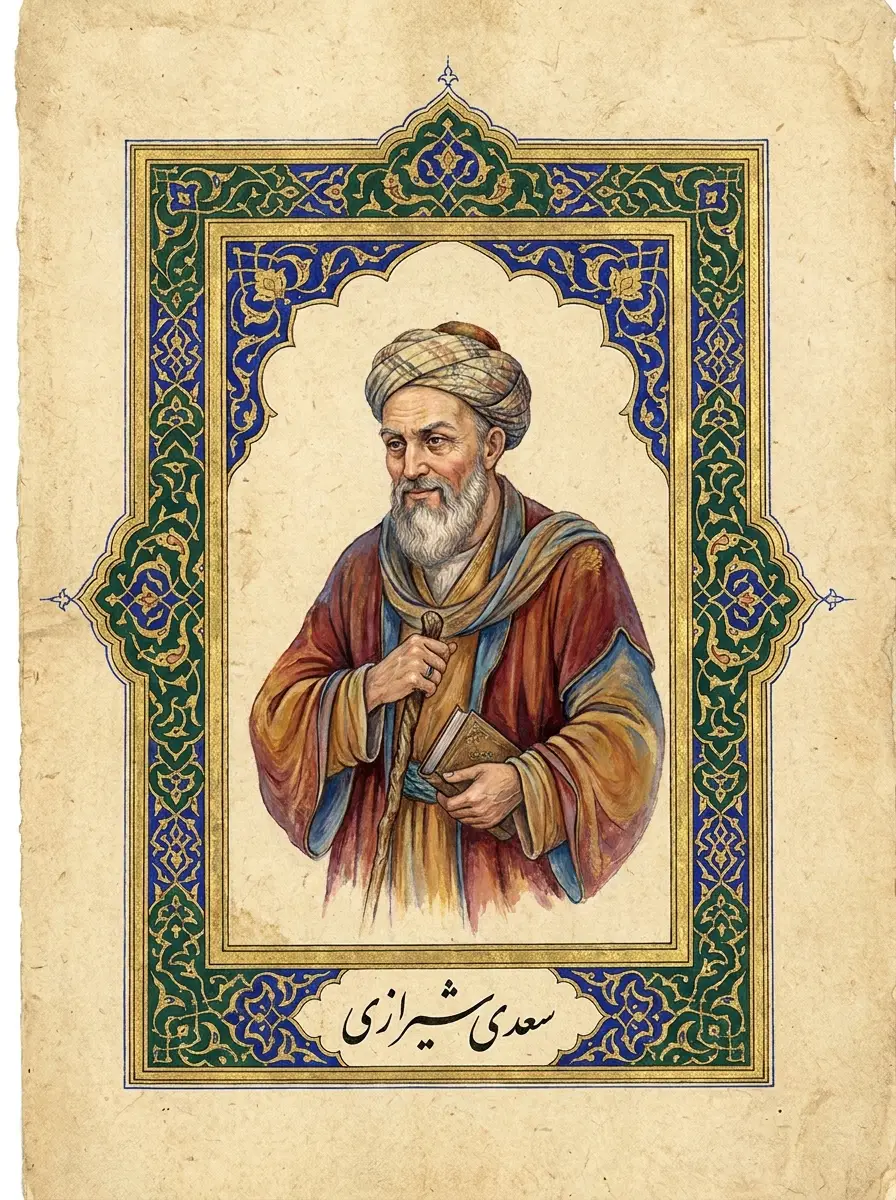
Saadi
The major Persian poet and writer (c. 1210–1291) from Shiraz, author of the Gulistan and Bustan, world-renowned for his ethical and humanistic wisdom.
Read in context →Biography
Abu Muhammad Mosleh al-Din Saadi of Shiraz (c. 1210–1291/2) was a poet and prose stylist, traditionally said to have studied at the Nizamiyya in Baghdad before decades of travel across the Islamic world during the turbulent Mongol era. His two masterpieces are the Bustan ('The Orchard,' completed 1257), a verse work on ethics and virtue, and the Golestan ('The Rose Garden,' completed 1258), a mix of prose and verse blending moral instruction, anecdote, and worldly wisdom. His writing is admired for its clarity, wit, and humane practical ethics, and lines from it (such as the Bani Adam verse on the unity of humankind) became proverbial. The dates of these two books are the firmest anchors in his biography, since his birth and death years rest on later, less reliable accounts. He profoundly shaped Persian prose and remains a staple of literary education.
Quotes & narrations
«The children of Adam are limbs of one body, for in creation they are of one essence.»
«You who are untroubled by the suffering of others do not deserve to be called a human being.»
Related entities
Also appears in
Sources
- Encyclopaedia Iranica, "Saʿdi"
- Encyclopaedia Britannica, "Saʿdī"
- Saeed Nafisi (on the disputed death date)