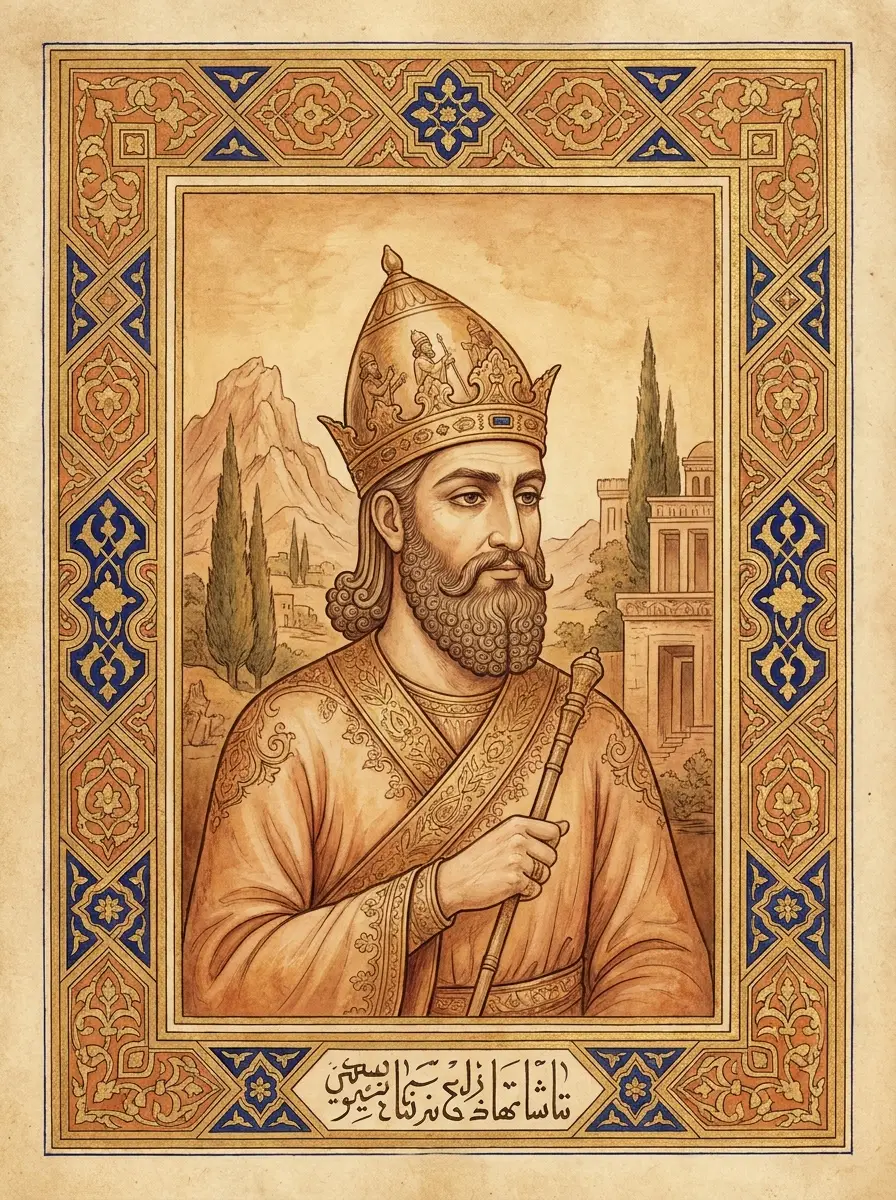
Cyrus the Great
Founder of the Achaemenid Empire (c. 600–530 BCE), renowned for his tolerance and just rule, including the conquest of Babylon and the freeing of the Jewish captives.
Read in context →Biography
Cyrus II, called Cyrus the Great (c. 600–530 BCE), was the founder of the Achaemenid Empire and its first King of Kings. Rising from the Persian region of Anshan, he overthrew the Median Empire (c. 550 BCE) and then conquered Lydia and Babylon (539 BCE), assembling the largest empire the world had yet seen. He is remembered for a comparatively tolerant model of rule, exemplified by his permitting the Judean exiles to return from Babylon, a policy echoed on the Cyrus Cylinder and in the Hebrew Bible. He died c. 530 BCE while campaigning on the empire's northeastern frontier and was succeeded by his son Cambyses II. A genuinely contested point is the manner of his death: Herodotus reports he fell in battle against the Massagetae queen Tomyris, but other ancient accounts conflict and the story is widely regarded as semi-legendary.
Quotes & narrations
«I am Cyrus, king of the world, great king, mighty king, king of Babylon, king of Sumer and Akkad, king of the four quarters of the world.»
«When I entered Babylon in peace… my numerous troops walked around in Babylon in peace, and I did not allow anyone to terrorise the people of Sumer and Akkad.»
Related entities
Also appears in
Sources
- Encyclopaedia Iranica, "Cyrus iii. Cyrus II the Great"
- Pierre Briant, From Cyrus to Alexander: A History of the Persian Empire (2002)
- Encyclopaedia Britannica, "Cyrus the Great"