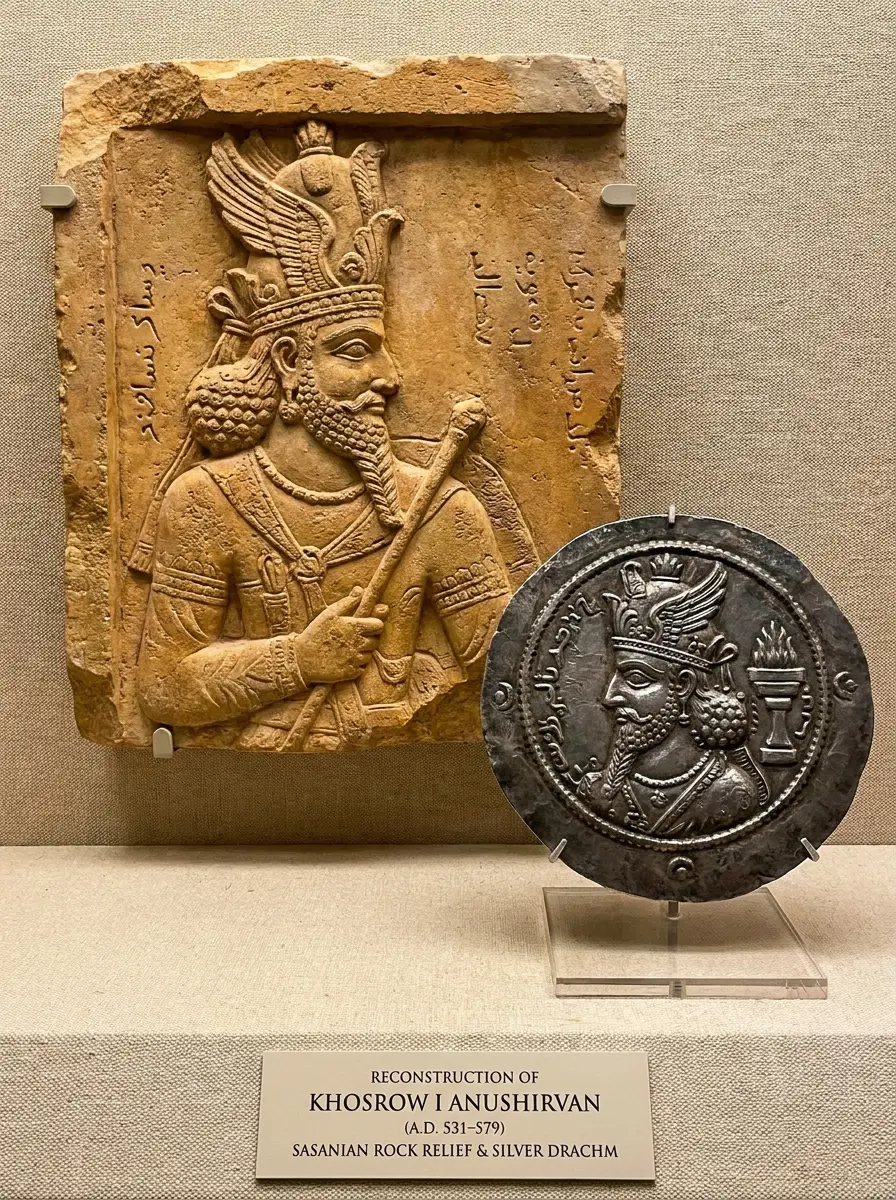
Khosrow I Anushirvan
The most celebrated Sasanian king (r. 531–579 CE), renowned for administrative and tax reforms, patronage of learning, and a reputation for justice ('the Just').
Read in context →Biography
Khosrow I, byname Anushirvan ('of the Immortal Soul') and known as 'the Just' (c. 512–579 CE), was the Sasanian King of Kings who presided over the empire's late-classical zenith. Succeeding his father Kavad I in 531, he crushed the egalitarian Mazdakite movement and then carried out sweeping reforms: a cadastral survey and fixed-rate taxation, a salaried standing army, and administrative centralization. Militarily he sacked Antioch (540), destroyed the Hephthalite confederation in alliance with the Turks, and extended Persian influence into Yemen. He was also a celebrated patron of learning, credited with welcoming Greek philosophers and sponsoring translations from Sanskrit and Greek (including the introduction of chess and the Kalila wa Dimna fables). A contested point is that the attribution of the great vaulted hall Taq Kasra at Ctesiphon to his reign is traditional but uncertain and debated among scholars.
Quotes & narrations
«Justice is the foundation of kingship; without justice no realm endures.»
Related entities
Sources
- Encyclopaedia Iranica, "Kosrow I"
- Arthur Christensen, L'Iran sous les Sassanides
- Touraj Daryaee, Sasanian Persia